The pipe is under concrete, but it is not invisible. A methodical hour of checks can tell you whether you have a slab leak — and roughly where it is hiding.
Learning how to find a slab leak starts long before anyone touches a tool. In Keller, where almost every home sits on a slab-on-grade foundation with its water lines buried in or under the concrete, a leak rarely announces itself with a flood. It whispers first. The floor feels warm in one odd spot in the hallway. The water heater seems to run at hours when nobody has used a tap. A faint hiss survives in a quiet house long after every fixture is off. None of those clues proves anything on its own, but together they form a pattern worth testing properly instead of ignoring.
That pattern matters more here than in a house with a basement, where a dripping pipe can be spotted with a flashlight. Under a Keller slab, water has nowhere honest to go. It follows the path of the pipe trench, soaks into the expansive clay soil our neighborhoods are built on, and can travel a surprising distance before it shows itself as a damp edge along a wall in Hidden Lakes or a soft spot in flooring over in Timber Creek. The stain you see is often not where the pipe failed. That is why a proper search works in stages: first confirm water is escaping at all, then narrow down which line, then which room, then which few feet of floor.
Work through the checks in this guide in order, and write down what you find as you go. A meter reading, the time you took it, and which rooms felt warm are exactly the details that make professional slab leak detection faster and more precise when you get to that step. If you are still at the earlier, uneasy stage — just a suspicion and a higher bill — our guide to the signs of a slab leak covers the full list of warning signs to compare against what you are seeing at home.
The meter test is the single most useful thing a homeowner can do, because it answers the yes-or-no question without any guessing. Keller homes are metered at the street, usually in a box near the curb along Keller Parkway side streets and the older lanes near Bear Creek alike, and that meter only moves when water is moving somewhere on your side of it. Start by turning off everything that uses water: faucets, toilets, the washing machine, dishwasher, irrigation system, and the automatic fill on a pool if you have one. Tell everyone in the house not to run a tap for the next hour.
Now open the meter box and look at the dial. Most modern meters have a small low-flow indicator — a tiny triangle, star or dial that spins with even a trickle. If that indicator is moving while nothing in the house is running, water is going somewhere it should not. Take a photo of the full meter reading, note the time, and leave the water alone for sixty minutes. Photograph the reading again. If the number has climbed with every fixture off, you have confirmed a leak. You have not yet proved it is under the slab — a running toilet or an irrigation line can do this too — but you have replaced a worry with a fact, which is the whole point of this stage.
To separate a slab leak from an ordinary indoor leak, repeat the test with your home's main shut-off valve closed. That valve is often in a box near the meter, in the garage, or where the main line enters the house. Close it, then check the meter again. If the meter stops, the leak is inside the house's plumbing, downstream of the valve. If it keeps moving with the house isolated, the escape is in the yard service line between the meter and the house. Either result is valuable. The EPA's WaterSense guidance on finding leaks uses this same meter logic nationally, because a meter cannot be argued with — it simply counts what your house is losing.
Once the meter says yes, walk the house slowly, barefoot if you can stand it. A leak from a hot-water line under the slab often creates a warm patch in tile, wood or even carpet — sometimes a whole warm trail that follows the line's path from the water heater toward a bathroom. In many Keller homes the heater sits in the garage or an attic, and its hot line drops into the slab and crosses under hallways and living areas to reach the kitchen and baths. A warm spot in the middle of a room, far from any vent, deserves a mark with painter's tape and a note of the time. Cold-water leaks will not warm the floor, so a cold result does not clear you — it just means this particular clue is silent.
Next, use the quietest hour you have. Late at night, with the air conditioning off and the house settled, put your ear near baseboards and listen along walls that carry plumbing. A pressurized leak under concrete can produce a faint hiss, a soft rushing, or in still houses a sound people describe as water running somewhere inside the wall itself. Check room by room and note where the sound is strongest, not just where you happen to hear it first — sound travels along pipes and concrete, so the loudest point is information, the first point is not. A musty, damp smell in one room that never quite airs out, especially along an exterior wall, is another marker to tape and date.
Finish this pass outside. Walk the foundation line and look for soil that stays dark and damp days after the last rain, a strip of grass along the slab that is greener and faster-growing than the rest of the yard, or hairline cracks in the slab edge and brick mortar that are new since last season. Tarrant County clay swells when wet and shrinks when dry, and a steady leak keeps one patch of that clay permanently swollen while the rest of the yard cycles. That contrast — one wet zone that never dries — is one of the most Keller-specific clues there is.
Plenty of leaks imitate a slab leak, and ruling them out saves you from worrying about the wrong repair. Toilets are the first suspects: a worn flapper lets water seep from tank to bowl around the clock, silent and invisible. Put a few drops of food coloring in the tank, wait twenty minutes without flushing, and check the bowl. Color in the bowl means the toilet is leaking — annoying, wasteful, but not a slab problem. Our wider water leak detection checklist walks through the other usual indoor culprits, from water-softener drains to refrigerator lines, in the order a homeowner should clear them.
Check the water heater next. Look at its base for pooling, listen for a constant faint refill, and feel whether the hot line leaving the tank stays warm far down its run when no hot water has been used — a sign hot water is leaving continuously. Then check irrigation. Keller yards with automatic sprinklers can hide a broken lateral line or a stuck valve that bleeds water for hours overnight, soaking the soil near the foundation in a way that looks exactly like a slab leak from outside. Run the meter test once with the irrigation supply isolated; if the creeping stops, your problem is in the yard system, not under the house.
If every look-alike comes back clean and the meter still moves with the house isolated from the yard, the evidence is pointing under the floor. That is not a failure of your detective work — it is its conclusion. You have done exactly what this stage is for.
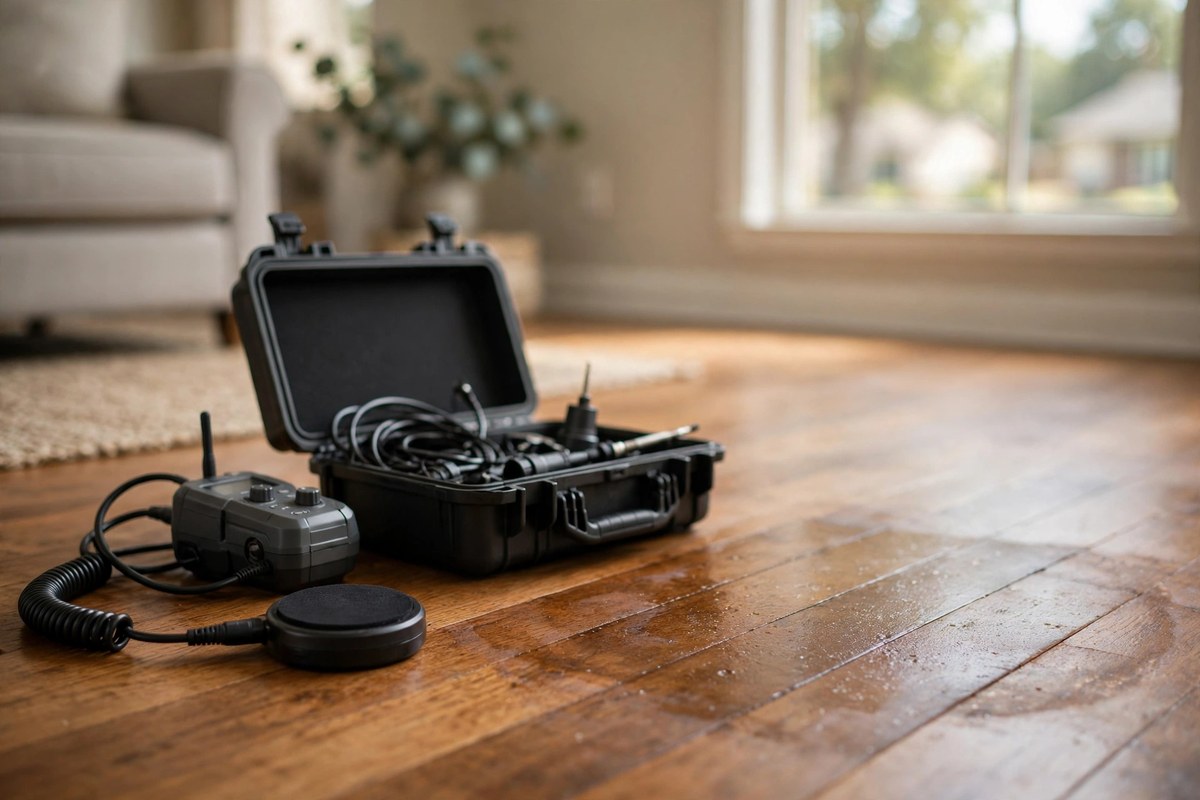
There is an honest limit to homeowner testing, and it is worth naming: your checks can confirm a slab leak and usually narrow it to a line and a room, but they cannot place a mark on the floor accurate to a few inches. That final step needs equipment most homes do not own. Detection specialists use electronic listening devices that amplify the sound of pressurized water escaping a pipe and let a trained ear triangulate it through concrete, thermal imaging cameras that reveal the warm plume a hot-water leak spreads through a slab, and line-tracing and pressure testing that confirm which individual run has failed before anyone talks about opening a floor.
This is why the notes from your own checks matter so much. A technician who arrives knowing the meter moved a certain amount in an hour, that the warm spot sits in the hallway between the heater and the primary bath, and that the toilets and irrigation have already been cleared, starts the job halfway done. On our slab leak detection page we explain how that pinpointing visit works in Keller homes and why locating first — before any concrete is touched — protects your floors from exploratory damage. The goal is always the smallest, most certain opening, made in the right place the first time.
One caution belongs here: resist the urge to start breaking tile or cutting concrete on a suspicion. A warm spot can sit several feet from the actual break because water spreads along the trench, and sound can echo along a pipe run. Homeowners who open a floor on a hunch sometimes open two or three. Confirm, narrow, then let the pinpointing equipment choose the spot — that order is cheaper in every currency, including your flooring.
If your meter test confirmed a leak and your room-by-room pass found its neighborhood, act promptly but calmly. A slab leak does not usually demand the middle-of-the-night response a burst pipe does — if you ever face that instead, our guide on why your water bill is so high and the burst-pipe steps linked from it cover the emergency version — but it should not sit for months either. Every week it runs, it is softening the soil support under one part of your foundation, feeding moisture into flooring and wall bases, and adding water you are paying for to a bill that will keep climbing until the line is fixed.
While you arrange the pinpointing visit, take three protective steps. Photograph every clue — the warm-spot location, any damp soil, any new crack — with dates, because documentation helps if you later talk to your insurer about resulting damage. Keep foot traffic and heavy furniture off a floor area that feels soft, buckled or unusually warm. And if the meter shows a fast leak — the low-flow indicator spinning rather than creeping — shut the house valve down to a minimum-use pattern until help arrives, rather than letting a strong flow undermine the slab around the clock.
Most Keller homeowners who work through these stages say the same thing afterward: the stressful part was the not-knowing. Once you know how to find a slab leak — meter first, clues second, look-alikes cleared, equipment last — the problem shrinks from a fear about your whole foundation to a single failed section of pipe in a known place. That is a solvable problem, and it starts with an hour, a meter box key, and a roll of painter's tape.
You can do the most important parts yourself: the meter test confirms whether water is escaping, and barefoot warm-floor checks, quiet-house listening and a foundation walk can usually narrow a leak to a line and a room. What homeowners cannot reliably do is pinpoint the break to within a few inches — that final step needs electronic listening and thermal imaging through the concrete. Think of your checks as proving and narrowing the problem, and professional detection as placing the exact mark.
The first look takes five minutes: if the low-flow indicator moves while every fixture is off, you already have strong evidence. The fuller version — photograph the reading, wait an hour with no water use, photograph it again — takes about an hour and gives you a rate, not just a suspicion. Very slow leaks may need a longer window, so if the first hour is borderline, repeat the test overnight when the house uses no water at all.
No. Only leaks from hot-water lines warm the floor, and even then the warm patch can appear several feet from the break because heat spreads through the slab and along the pipe trench. A cold-water slab leak may show no warmth at all — its clues are the meter movement, sound, damp soil along the foundation and a rising bill. That is why the meter test comes first in any search: it catches both kinds, while the warm-floor check only catches one.

A pencil-thin stream sounds too simple to save a house, but on the right night it does exactly that. Here's when dripping works in Keller, when it doesn't, and how to do it properly.
Read the guide →
Water spraying, ceiling sagging, panic rising. Here's the exact order Keller homeowners should follow — shut-off first, then power, drainage, documentation and detection.
Read the guide →Fast response across Keller · Non-invasive equipment · Up-front explanation of your options
