A burst pipe can pour hundreds of gallons into your walls before breakfast. The first five minutes decide whether you're mopping — or gutting drywall.
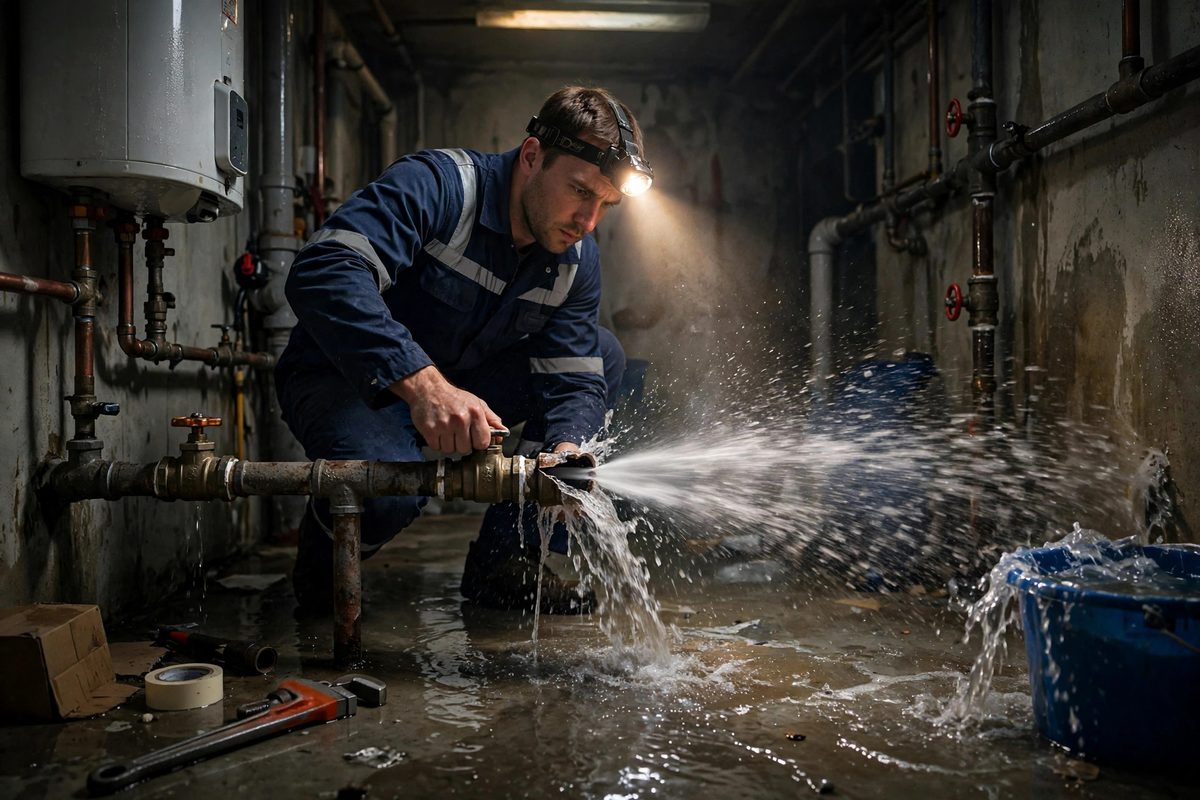
Knowing what to do if a pipe bursts matters more in the first five minutes than in the next five hours. A split half-inch line doesn't drip politely — it sprays, and in a Keller slab home that water has nowhere good to go. It runs under flooring, wicks up drywall, pools on top of the slab and finds the lowest room in the house, which is rarely the room where the break started.
So forget the mop for a moment. Forget moving furniture. The only job that matters at the start is stopping the flow, because every minute the line stays live adds more water than an hour of cleanup can undo. Homeowners in Hidden Lakes and Marshall Ridge who lived through the February freeze learned this the hard way: the houses that fared best weren't the ones with the best shop vacs — they were the ones where somebody knew where the shut-off valve was and got to it fast. This guide walks through the order that works, step by step, in the sequence that actually limits damage.
Your main shut-off is either at the meter near the street — under the iron lid in the box by the curb on most Keller streets off Keller Parkway and Rufe Snow Drive — or at a valve where the main line enters the house, often in the garage or a front flower bed. At the meter, lift the lid, open the small reader flap, and turn the homeowner valve (or the meter valve itself) clockwise until it stops. Some meter valves need a meter key, the T-handled wrench sold at every hardware store on Keller Parkway — if you don't own one, buy it on a calm Saturday, not during a flood.
No luck at the meter? A temporary stopgap is closing the valves at the nearest fixtures, but that won't help if the break is in a main or attic line, which in Keller's two-story homes it often is. Once the water is off, confirm it: open a faucet downstairs and watch the flow die. If water is still coming at pressure after a minute or two, the valve isn't fully closed or you're on the wrong valve — go back and try again before moving on.
While one person is at the meter, everyone else in the house can be working this list in parallel:
That sequence — water, power, drain, call, document — is the whole emergency in five words. Everything after this point is damage control, and damage control can be done calmly once the flow has stopped.
With the supply off, shift to containment. Move what water ruins fastest: rugs, cardboard boxes stored on garage and closet floors, electronics, and anything upholstered. In Keller's slab homes there's no basement for water to disappear into, so it spreads sideways at floor level — lifting items even a few inches onto plastic bins or foil-wrapped blocks buys real time. Towels along baseboards slow the wicking into drywall, and a bucket under a ceiling drip beats a soaked carpet every time. If a ceiling is bulging, that pocket is holding gallons; keep people out from under it.
Start drying the same day. Fans aimed along baseboards, a borrowed wet vac for hard floors, and your AC or heat running to pull humidity all help. North Texas humidity means mold can get started in as little as a day or two inside a closed wall, which is why the federal flood guidance at Ready.gov stresses drying wet materials within 24 to 48 hours. You can't dry what you can't reach, though — water trapped behind tile, under luxury vinyl plank or inside an insulated exterior wall is exactly the kind that stays hidden. That's a detection problem, and we'll come to it below.
It feels wrong to photograph a mess instead of fixing it, but do it anyway. Shoot the break itself, every room the water reached, the baseboards and flooring it touched, and your meter dial showing the shut-off worked. Keep damaged materials you remove — a square of soaked carpet pad or a section of split pipe tells the story better than a description. Most homeowners policies treat a sudden burst very differently from a slow, long-running leak, and clear, time-stamped documentation is what keeps a burst pipe claim in the first category.
Write down the timeline while it's fresh: when you noticed it, when the water went off, who you called. If the burst followed a hard freeze, note the overnight low — after the 2021 freeze, Tarrant County claims moved faster for homeowners who could show the sequence of events. Our earlier guide to how to keep pipes from freezing in Texas is worth reading once the dust settles, because the most common reason a Keller pipe bursts in the first place is a freeze crack that only opens up at the thaw.
Freezes get the headlines, but they're not the only cause. Keller sits on expansive clay soil that swells in wet springs and shrinks hard in dry Augusts, and that seasonal movement flexes the slab and everything running under or through it. A copper line under a slab in the older homes near Bear Creek Parkway has been bending microscopically with that soil for thirty years. Add high municipal water pressure, corrosion from the inside, or a washing-machine supply line that was only ever rated for a decade, and a pipe can let go on an ordinary Tuesday with no freeze in sight.
That under-slab scenario deserves respect: a burst or split line beneath the foundation doesn't announce itself with a spray — it announces itself with a warm floor, a spinning meter or a bill that doubles. If your burst turns out to be under the slab, the repair path is completely different, and our slab leak detection page explains how those breaks are pinpointed without tearing up the whole floor. The EPA's WaterSense leak resources also make a useful point for this stage: a single running or ruptured line can waste thousands of gallons before anyone notices, which is why the meter is the most honest witness in the house.
Here's the part homeowners miss: pipes rarely burst alone. A freeze that split one attic line usually stressed every line in that attic. Pressure shock from a sudden break can loosen joints two rooms away. Before walls get closed and floors go back down, the whole system needs checking — pressure testing section by section, listening along the lines, and using moisture meters and thermal imaging to map where the water actually traveled. That's the difference between drying a house once and opening the same wall twice.
A proper water leak detection visit after a burst does three things: it confirms the break you found is the only break, it traces how far the water spread so drying targets the right walls, and it gives you a written record of cause and location — the document insurers ask for and the paper trail that protects you if a second damp patch appears in a month. If the meter still creeps with every fixture off and the main line open again, something is still leaking somewhere, full stop. Don't let new flooring go down over that question mark. And if your only symptom so far is a strange bill rather than a flood, start with our checklist on why your water bill is so high — it walks through the same meter test step by step.
Usually in the meter box at the curb, under an iron lid near the street — turn the homeowner-side valve clockwise, using a meter key if the valve has that style of head. Many Keller homes also have a secondary shut-off where the line enters the house, often in the garage or a front bed. Find yours on a dry weekend and make sure everyone in the house knows it too.
Only where water and electricity meet: if water is pooling near outlets, appliances, the breaker panel or an electric water heater, switch those circuits off at the panel before walking through the water. If everything electrical is dry and above the waterline, you can leave the power on — you'll want it for fans, lights and the wet vac during cleanup.
Generally, yes for the sudden water damage — a pipe that bursts without warning is the classic covered event, provided the home was heated and maintained. What insurers push back on is damage from leaks that ran unnoticed for weeks. That's why fast shut-off, photos with timestamps, and a written leak detection report matter: they prove the burst was sudden and that you acted promptly.
Texas homes aren't built for hard freezes, and Keller's pipes hide in attics and exterior walls. This is the night-before checklist that keeps them from bursting.
Read the guide →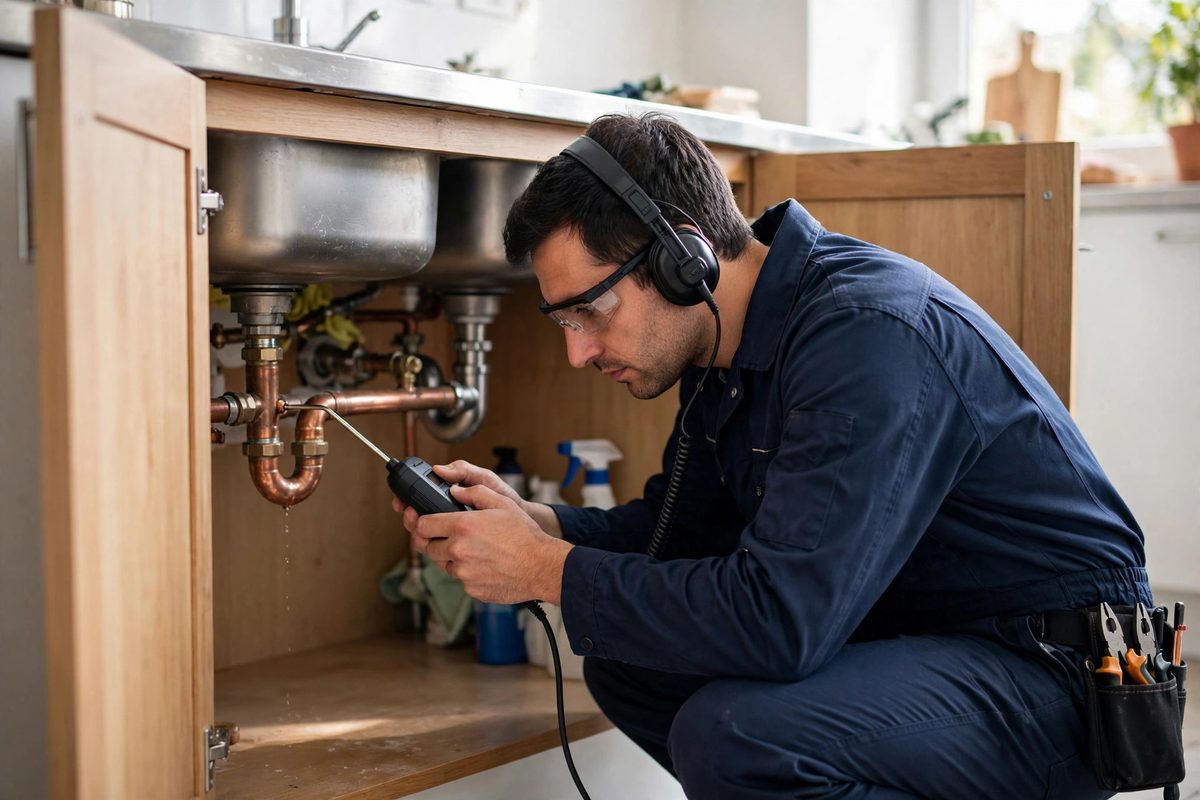
The bill jumped but your habits didn't. Work through this checklist in order — boring causes first, then the meter test, then the usual suspects hiding in your bathrooms and yard.
Read the guide →Fast response across Keller · Non-invasive equipment · Up-front explanation of your options
