Before you panic (or just pay it), rule out the boring causes — then let your water meter tell you the truth.
Not every high bill is a leak. Start with the dull possibilities, because they're free to check. Was this billing cycle longer than the last one? A 33-day cycle bills about 15% more water than a 28-day cycle with identical habits. Did rates change? Cities adjust them periodically, and the dollar figure rises even when your usage doesn't. Were there guests, a pool fill, or a new summer irrigation schedule? July in Keller is thirsty work for a lawn.
The cleanest comparison is gallons, not dollars — your bill prints the usage. If gallons are flat but dollars jumped, that's rates or cycle length, and you can stop worrying. If gallons jumped too, keep reading.
Your water meter doesn't care about theories. Turn off every tap, toilet, appliance and the irrigation system, then watch the meter's low-flow indicator (the small triangle or snowflake dial). If it moves with everything off, water is escaping somewhere — full stop, no debate. Note the reading, wait 30 minutes without using any water, and read it again: the difference tells you roughly how fast you're losing it.
We published the complete step-by-step on our water leak detection page, including the best time of day to run the test. If your meter sits perfectly still, the high bill is usage, not a leak — look at irrigation timers and teenage showers. If it moves, work the suspect list below.
The most common indoor water-waster isn't dramatic — it's a toilet flapper that no longer seals, letting the tank silently refill a little every few minutes, all day and all night. A toilet leaking at a good clip can waste more than 200 gallons a day, and it makes almost no sound doing it.
Test each toilet with the dye trick: put a few drops of food coloring in the tank, don't flush, and wait 15 minutes. Color in the bowl means the flapper is leaking. It's a five-dollar part and a ten-minute fix — and for a surprising number of 'mystery bills,' it's the whole story.
Next, the water heater: check the pan and the area around the tank for moisture, and look at the temperature-and-pressure relief valve's discharge pipe — a valve that drips constantly is quietly billing you for heated water. Then irrigation, Keller's summertime heavyweight: walk the yard while the system runs and look for geysers from cracked heads, zones that won't shut off, and soggy strips along the lines. A stuck zone valve can pour water into the soil for weeks unnoticed.
Round out the check with the quiet ones: hose bibbs that drip outside (often hidden by a connected hose), a water softener stuck in its regeneration cycle, and the washing machine's supply hoses and drain. Each is small. Together, two of them explain a lot of doubled bills.
If the toilets pass the dye test, the heater is dry, irrigation is tight — and the meter still moves with everything off — the water is leaving through a buried line: the service line from the meter, or a line under the slab. This is where the other symptoms start to matter. Warm floor spots, a faint running-water sound at night, damp smells at floor level: we put together the full list in our guide to the signs of a slab leak, and it's worth ten minutes before you call anyone.
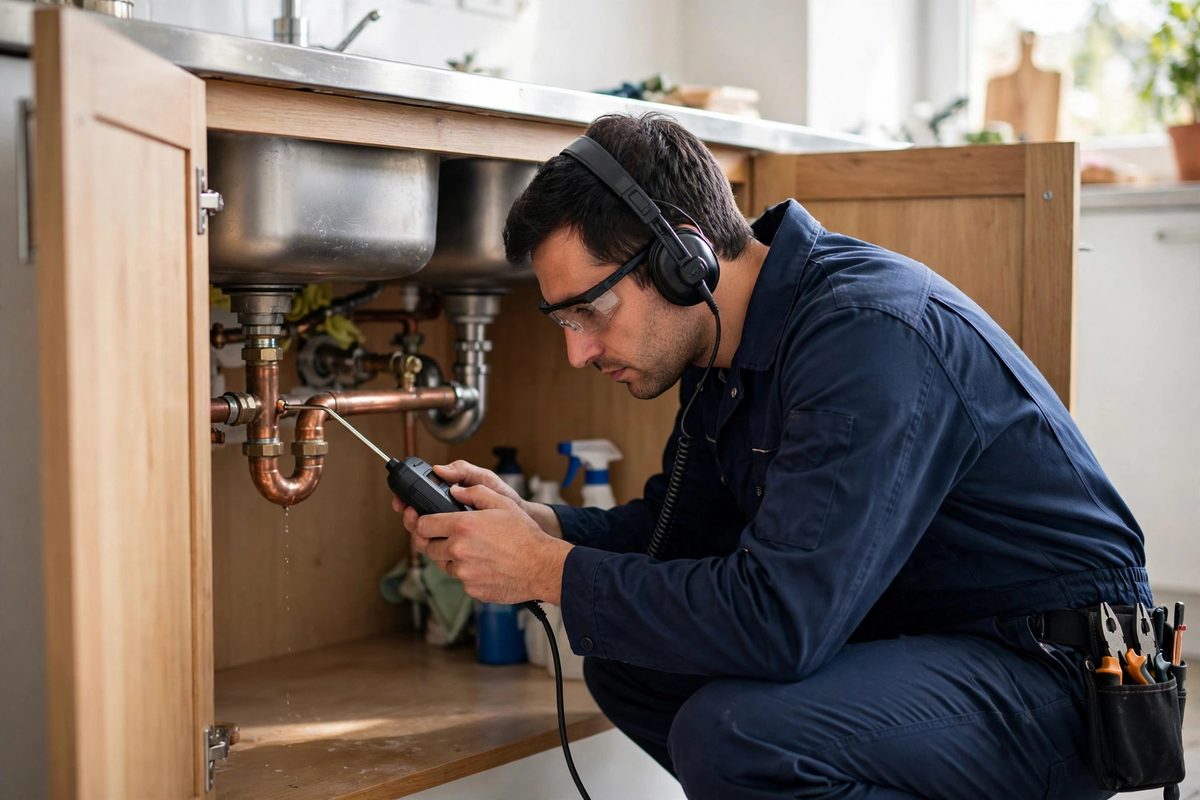
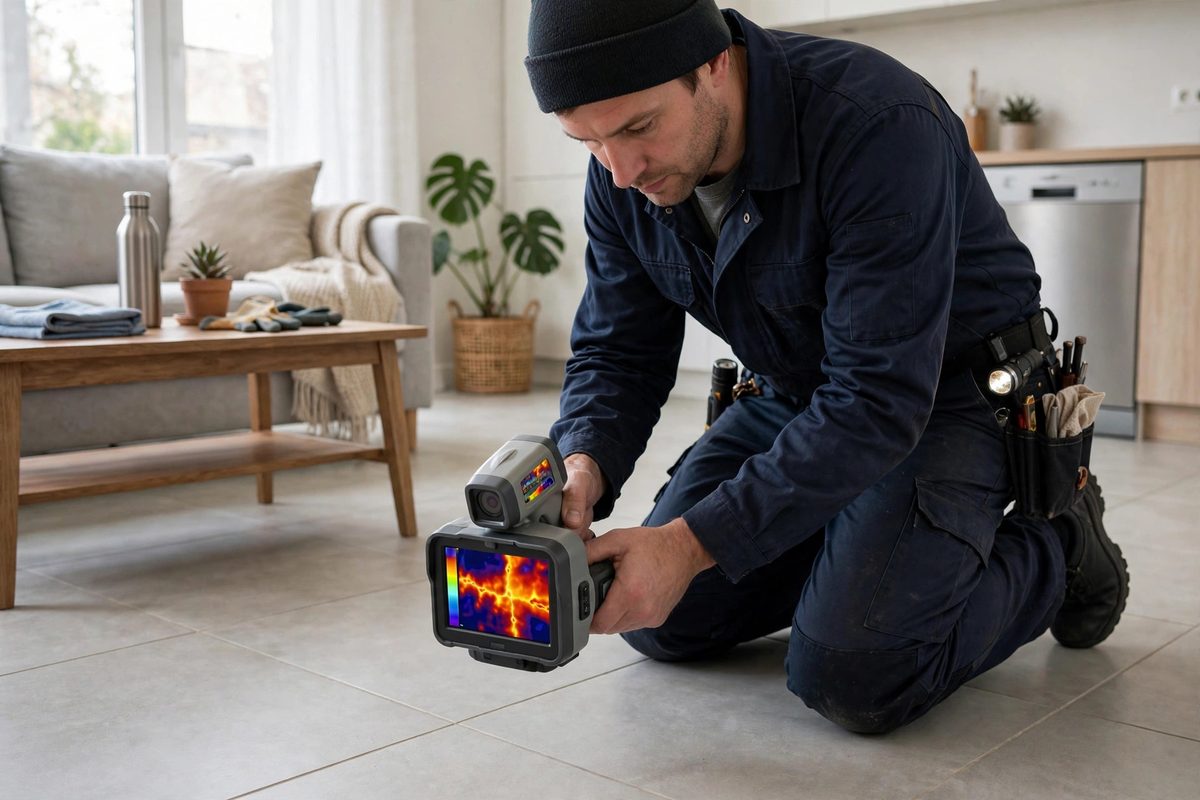
Underground leaks don't show up on a walkthrough because finding them takes equipment — acoustic listening, infrared imaging, isolation pressure tests. That's the entire job of slab leak detection: confirm it, pinpoint it, and only then talk about repairs.
Leaks sound small in drips and look enormous in gallons. A pinhole leak in a pressurized line can lose well over 100 gallons a day — 3,000 gallons a month, roughly a small swimming pool, every month, into the soil under your house. The running toilet at 200 gallons a day doubles that. When homeowners ask how a bill can jump so far so fast, this arithmetic is usually the answer: the leak never sleeps, never showers shorter, and never takes a vacation.
Not always — check the cycle length and summer irrigation first, since both can spike a single month. But if the billing period was normal and your meter test comes back positive, treat it as a leak until proven otherwise. Meters don't spin for no reason.
Many utilities offer a one-time leak adjustment when a homeowner documents the leak and its repair. Ask the city's utility billing office what they require — typically it's proof of the problem and the fix. The written findings from a detection visit are exactly that kind of documentation.
Do the meter test first. The city is responsible for the meter itself and can verify its accuracy; everything from the meter through your home — the service line, slab lines, fixtures — is the homeowner's side, and that's where leak detection works. If your meter moves with the house shut off, the leak is on your side of the line.
Warm spots on the floor, a meter that won't sit still, a bill that jumped for no reason — the seven clues a leak under your slab leaves behind, and what to do when you spot more than one.
Read the guide →Fast response across Keller · Non-invasive equipment · Up-front explanation of your options
