Slab leaks hide under concrete for months. These are the clues they leave behind — roughly in the order Keller homeowners notice them.
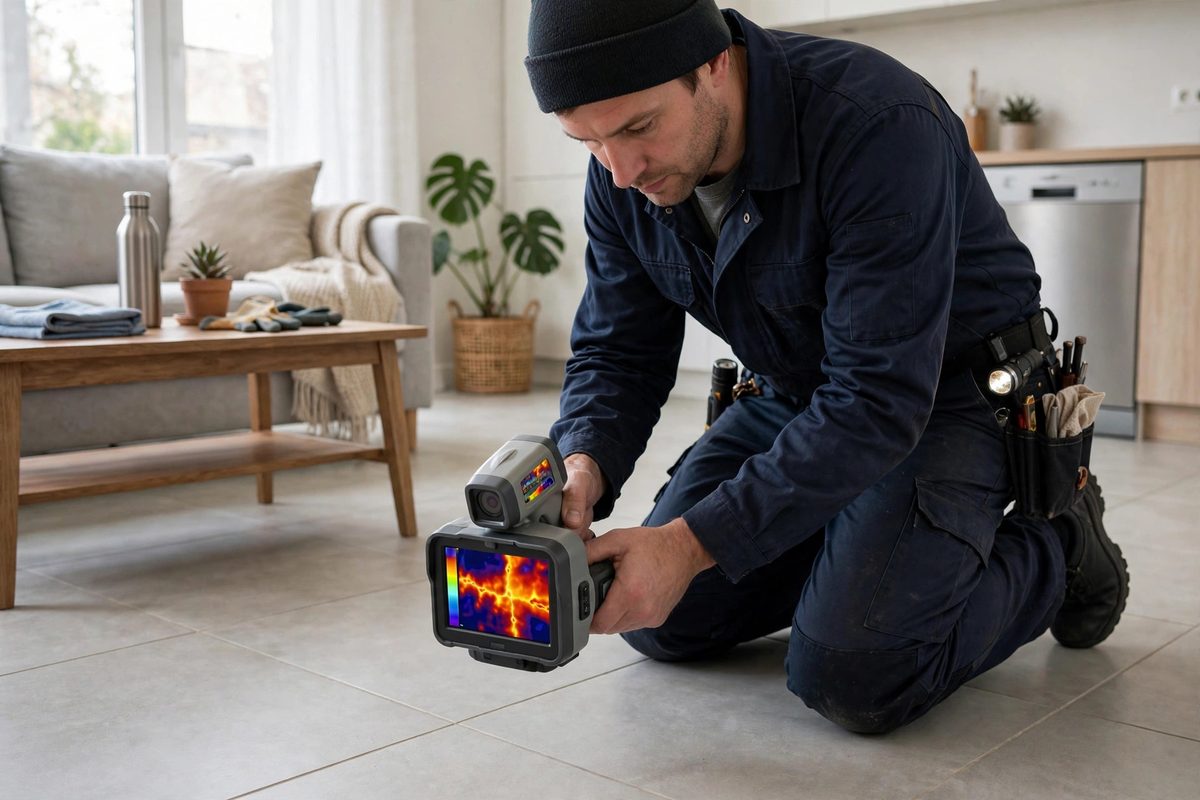
Almost every home in Keller sits on a concrete slab, and the water lines serving it run through or beneath that concrete. When one of those lines fails, the water doesn't announce itself with a puddle. It soaks into the soil under the slab, travels along the underside of the concrete, or wicks up slowly through the floor — often for weeks before anything looks wrong.
Add Keller's expansive clay soil, which swells and shrinks with the seasons and stresses the pipes a little more every year, and slab leaks become one of the most common hidden plumbing problems in the city. The good news: a slab leak almost always leaves clues. Here are the seven we hear about most, in roughly the order homeowners notice them.
A slab leak runs 24 hours a day, including while you sleep. The first symptom is usually financial: a bill that's noticeably higher than the same month last year, with no new pool, no guests, and no extra laundry to explain it. One odd month can be a billing quirk — two in a row is a pattern, and patterns under a slab rarely fix themselves.
This is the closest thing to a lie-detector test for your plumbing. Turn off every tap, toilet and appliance, then watch the low-flow indicator on your water meter. If it's moving, water is going somewhere it shouldn't. Our water leak detection page walks through the full 30-minute meter test step by step — it's the single most useful check a homeowner can run before calling anyone.
When a hot-water line leaks under a slab, the escaping water heats the concrete and flooring above it. Walk barefoot across your kitchen or bathroom tile in the morning: one distinctly warm patch — not a warm room, a warm spot — is a classic slab leak signature, and it marks the leak's neighborhood remarkably well.
Late at night, when the house is still, listen. A faint hiss or the sound of water moving through pipes when nothing is running means water is moving somewhere. Homeowners often describe it first as 'I thought the toilet was refilling' — except it never stops.
Water wicking up through a slab brings a musty smell that lives at floor level, mildew along baseboards, laminate that starts to cup or buckle, and carpet padding that feels damp in one area. Because the moisture arrives slowly, people often blame the weather or a spill. If the smell always returns to the same room, look down — the source is usually under it.
A leaking supply line bleeds pressure. Showers feel weaker than they used to, and hot water takes noticeably longer to arrive because the line is losing water — and heat — along the way. Pressure changes have other causes too, but combined with any sign above, they strengthen the case considerably.
A long-running slab leak washes soil out from under the foundation, creating voids. The house settles into them, and the evidence shows up as fresh hairline cracks in tile, grout or the foundation itself. Outside, watch for one patch of lawn that's always soft or greener than the rest, especially near the foundation line. By the time sign 7 appears, the leak has usually been running a while — which is exactly why signs 1 and 2 deserve a faster response.
One sign can have an innocent explanation. Two together almost never do. If you're checking boxes on this list:
A slab leak detection visit confirms whether a leak exists, pinpoints it, and gives you repair options in plain language — spot repair, reroute, or tunneling — before any floor comes up. The earlier that visit happens, the smaller every one of those options stays.
No. A pressurized water line leak erodes its own opening wider over time, and shifting clay soil doesn't reseal copper or PEX. Slab leaks only move in one direction — bigger — which is why catching one at the 'warm spot' stage beats catching it at the 'cracked foundation' stage.
It varies with the leak's size and your soil, but weeks to months is typical before signs surface. The serious damage isn't the water itself — it's the soil washed out from under the slab, which leaves voids the foundation settles into. Early detection keeps the problem plumbing-sized.
Policies differ, but many cover the resulting water damage and sometimes the cost of accessing the pipe (opening and restoring the floor), while the pipe repair itself is commonly excluded. A written detection report documenting the leak's location and cause is exactly the paperwork insurers ask for — it's part of what you receive from an inspection.

The bill jumped but your habits didn't. Work through this checklist in order — boring causes first, then the meter test, then the usual suspects hiding in your bathrooms and yard.
Read the guide →Fast response across Keller · Non-invasive equipment · Up-front explanation of your options
