A pencil-thin stream sounds too simple to save a house — but on the right Keller night, it does. Here's when dripping works, when it doesn't, and how to set it up properly.
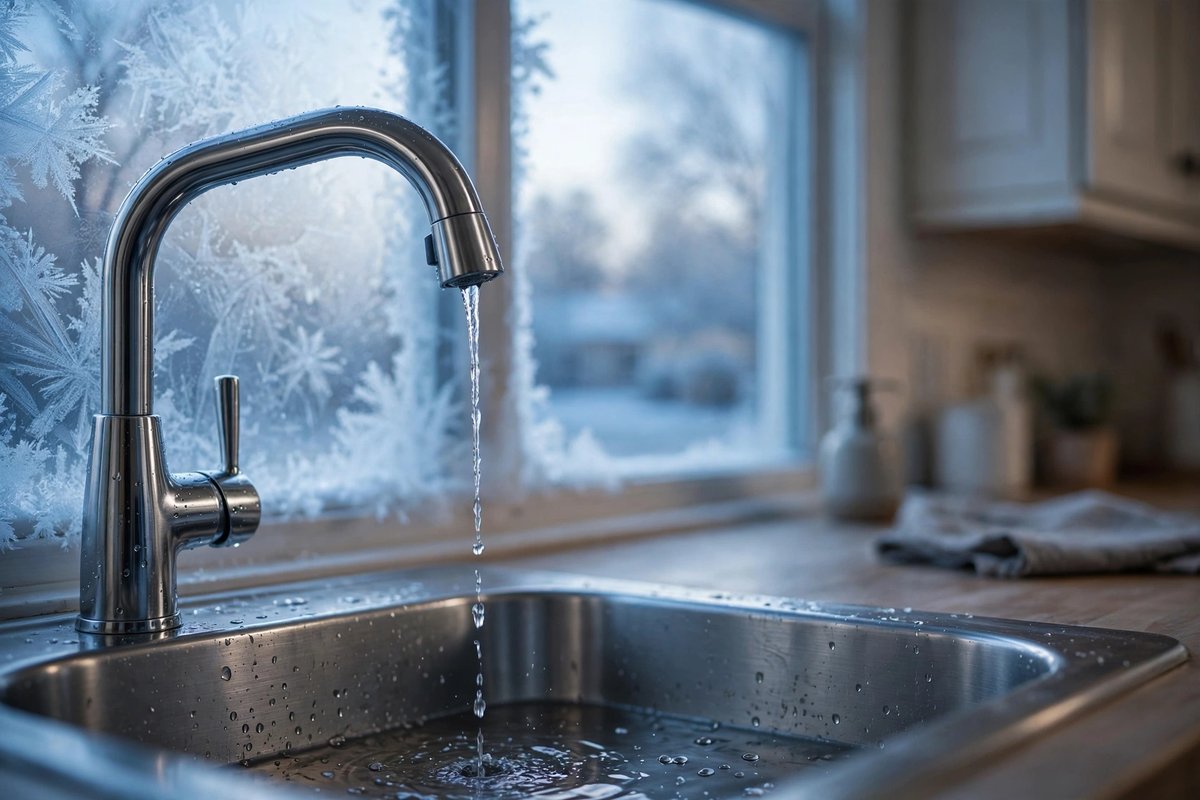
Should you drip faucets when freezing weather settles over Keller? Yes — on the right night, that humble drip is one of the most effective things you can do. But the honest answer has a second half: dripping is not for every chilly evening. Keller gets plenty of nights that brush 31 or 32 degrees for an hour before dawn and harm nothing. Dripping then just sends water down the drain for no benefit. The nights that matter are the ones forecast to fall into the 20s and stay there, especially with the kind of north wind that pushes cold deep into attics and exterior walls.
Why does something so simple work? Two reasons, and the second matters more than the first. Moving water takes longer to freeze than water sitting still, so a drip keeps the most vulnerable stretch of pipe from going solid as quickly. More importantly, pipes rarely burst where the ice forms — they burst between the ice blockage and the nearest closed faucet, where pressure builds as the ice expands. An open, dripping faucet gives that pressure somewhere to go. Think of it less as keeping the pipe warm and more as leaving a pressure valve cracked open all night.
This is where Keller homeowners have to read a forecast like a local, not like a weather app icon. A fast-moving front that drops us to 29 degrees at 4 a.m. and lifts back above freezing by breakfast is usually a non-event for indoor plumbing. A slow Arctic high that parks over Tarrant County, holds us at 22 degrees from dinner until well past sunrise, and adds a stiff wind off the open ground north of town — that is a dripping night, a cabinet-doors-open night, a check-on-everything night.
Your house matters as much as the forecast. Most Keller homes are slab-on-grade with no basement, and their water lines run through the attic, down exterior walls, and across the garage ceiling to the water heater. Homes in Timber Creek and Woodland Springs with two-story plumbing stacks have long attic runs that sit in air nearly as cold as the outdoors. A ranch-style home near Bear Creek with short interior runs is tougher. If your pipes live in the attic or on a north-facing wall, drip earlier and more generously than a neighbor whose plumbing is all interior. When in doubt, our fuller guide to how to keep pipes from freezing in Texas lays out the whole night-before routine this one habit belongs to.
Most dripping failures are not failures of the idea; they are failures of setup. A faucet opened to a reluctant drip at 9 p.m. can slow to nothing by 2 a.m. as pressure shifts, and the coldest hours are exactly when protection matters. Set it up deliberately, once, before bed:
One practical Keller note: if you are on a septic system or simply hate waste, place a clean bucket under a bathtub drip and reuse the water. The tub is often the ideal faucet to drip anyway — it tends to sit at the end of a long run, and nobody has to listen to it tapping into a metal sink all night.
Ask a Keller homeowner after a freeze which pipes they dripped and they will name the kitchen sink. Ask where the break happened and the answer is often somewhere they never thought about: the laundry room supply lines on an exterior garage wall, the guest bathroom that stays closed and unheated-feeling all winter, or the bar sink in a rarely used corner. Idle fixtures are the most vulnerable plumbing in the house, because the water in their lines may not have moved in days before the freeze arrives, and the rooms around them are often the coolest.
Walk the house, not your habits. Any faucet on an outside wall gets a drip. Any bathroom you keep closed gets its door opened for the night so house heat can enter. The outdoor faucets are a different job entirely — those should never be dripped; they should have their hoses removed and insulated covers fitted, as the federal guidance at Ready.gov's winter weather page also stresses for exposed and unheated plumbing. And remember the washing machine: its supply hoses and valves sit in exactly the laundry-room wall space that freezes first, so if that room is on an exterior wall, treat it like a chosen drip point and give the machine's lines the cabinet-and-warm-air treatment too.
Dripping has limits, and a Keller homeowner should know where they are. In a severe freeze that drops into the teens, or in a freeze paired with a power outage — the combination that did so much damage across North Texas in February 2021 — a drip may only delay a freeze rather than prevent one, particularly in attic lines. Tankless water heaters in garages and attics add another wrinkle: their freeze protection depends on electricity, so an outage leaves them and their short pipe runs exposed even while your faucets drip faithfully inside.
For a vacant house, a house you are leaving for a winter weekend, or any home bracing for that worst-case forecast, the stronger move is to shut the water off at the main and drain the lines down. No water, no burst. If you return or wake to a faucet that will not run at all, treat the line as frozen, open that faucet, and warm the pipe gently — never with a flame. And if water starts coming through a ceiling or wall instead, skip straight to our step-by-step on what to do if a pipe bursts: main shut-off first, then help. A burst in progress is an emergency leak detection call, not a wait-and-see situation.
Here is the quiet trap of a Texas freeze: a pipe can crack under ice pressure, stay sealed by the very ice inside it, and only begin leaking when everything melts. So the morning after a hard freeze is not the finish line — it is the inspection. Turn your drips off once temperatures are safely above freezing, then walk the house slowly. Look for new stains or bubbling paint on ceilings under attic lines, feel for damp or suddenly soft spots along exterior walls, and check floors near the laundry and kitchen for water that has no explanation.
Then let the meter settle the question. With every fixture off, watch whether the meter or its low-flow indicator still creeps; silent movement means water is going somewhere it should not. Our water leak detection page explains how that hidden flow gets traced to its exact spot, and leaks under the foundation need a different look again — a cracked line beneath the slab can follow a freeze, which is why our slab leak detection specialists check for warm floors and foundation dampness after cold snaps. Catching a thaw leak in its first week is the difference between drying a wall and rebuilding it, so do not let a successful drip make you skip the check.
Aim for a slow, steady drip that occasionally breaks into a thin stream — roughly the width of a pencil lead to a pencil itself. A barely-there drip that stops and starts is too little, especially for pipes in an attic or on a north-facing wall. If the night will stay in the low 20s or teens, lean toward the steady thin stream rather than the slowest drip you can set.
Both, where you can. Hot and cold lines run separately through your walls and attic, and either one can freeze on its own — the hot line to an exterior-wall sink is often the colder of the two because it sits idle longer between uses. Opening both taps a little protects both runs and gives the pressure building behind any ice two ways to escape.
A slow drip uses surprisingly little over one night — far less than a single burst pipe releases in its first few minutes. If waste bothers you, put a clean bucket or watering can under the drip and use the water on houseplants the next day. What dripping should never be is a substitute for insulation: if you are dripping the same faucets many nights every winter, those pipes need foam sleeves or heat tape so the habit can retire.
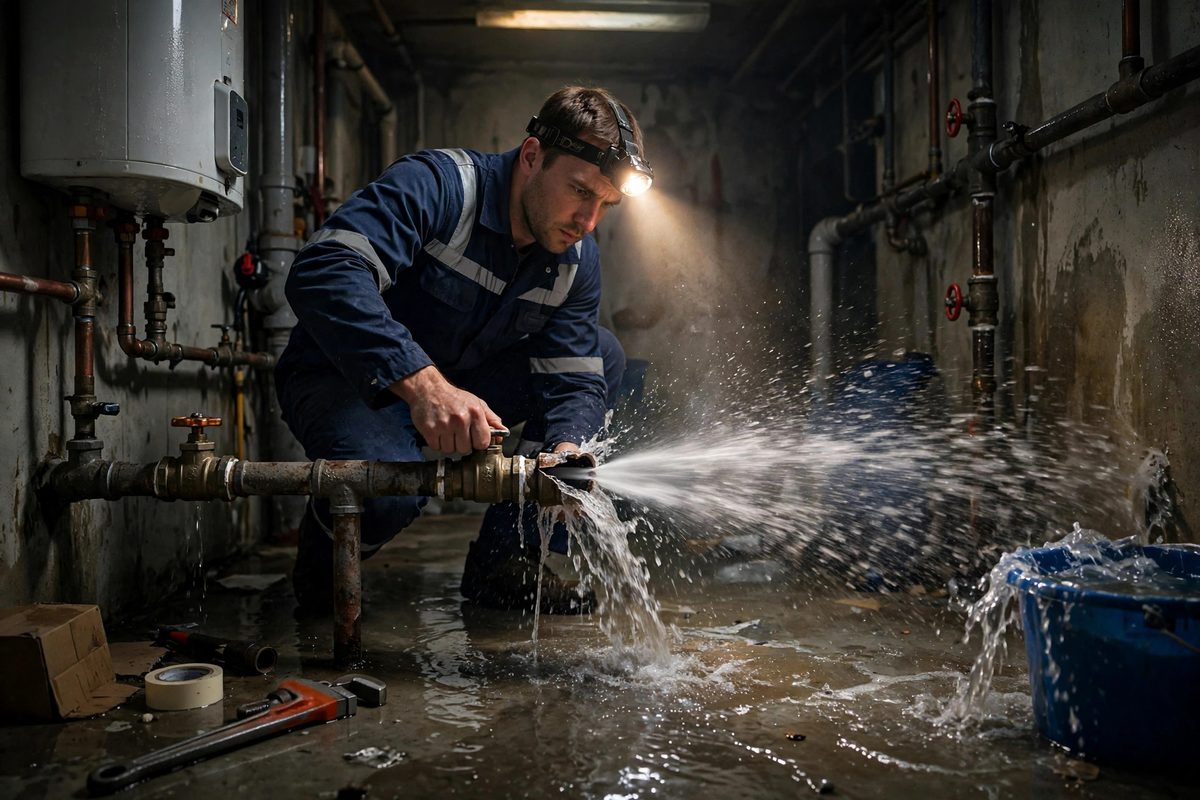
Water spraying, ceiling sagging, panic rising. Here's the exact order Keller homeowners should follow — shut-off first, then power, drainage, documentation and detection.
Read the guide →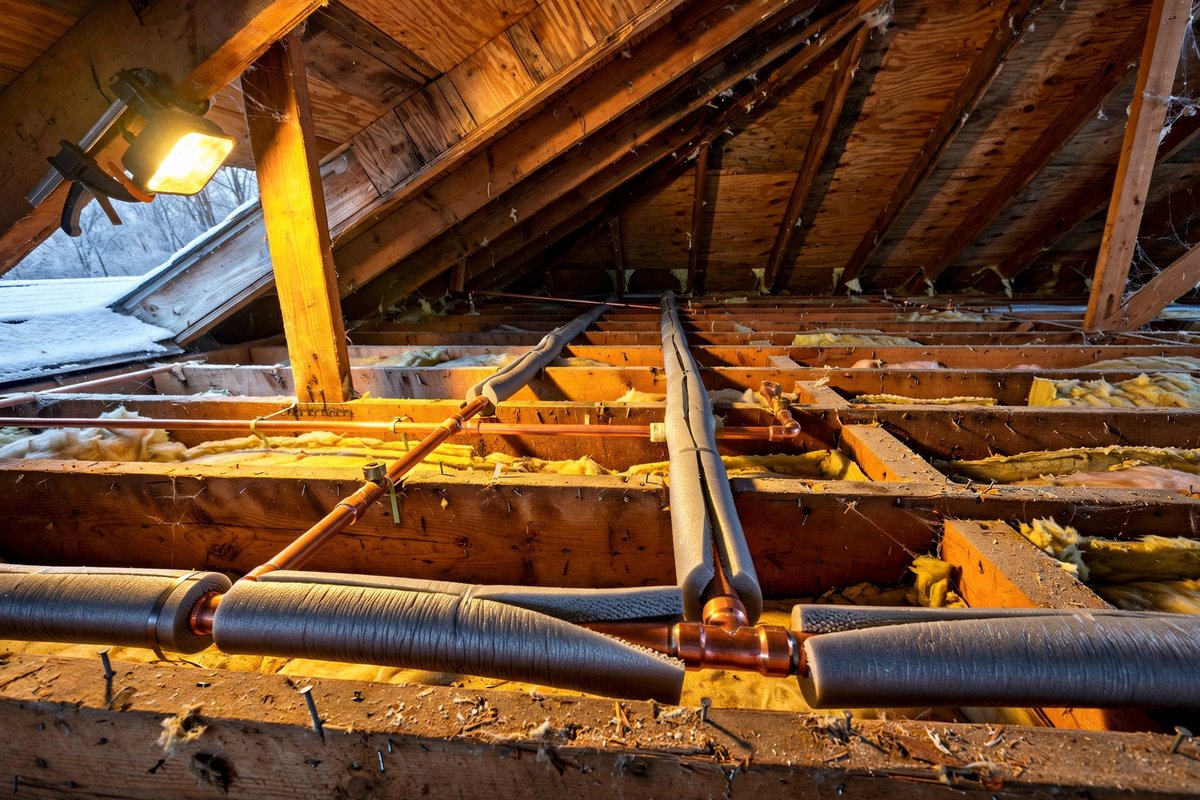
Texas homes aren't built for hard freezes, and Keller's pipes hide in attics and exterior walls. This is the night-before checklist that keeps them from bursting.
Read the guide →Fast response across Keller · Non-invasive equipment · Up-front explanation of your options
