Most leaks never announce themselves with a puddle. Two simple checks — the meter test and a room-by-room walk — will tell you in under an hour whether your plumbing is leaking somewhere it shouldn't.
Learning how to check for a water leak starts with the most honest witness in your house: the water meter. It doesn't guess, it doesn't forget, and it doesn't care how dry your floors look — if water is moving through your pipes when every fixture is off, the meter says so. In Keller, the meter sits in a ground-level box near the curb or sidewalk, usually with a lid marked WATER (sometimes buried under an inch of mulch or lawn clippings — a flat screwdriver and thirty seconds of digging usually sorts that out). Flip the lid open and you'll see the dial, and on most modern meters a tiny leak indicator: a small triangle or red gear that spins with even the smallest flow.
Here's the test itself, and it takes less time than brewing a pot of coffee. First, make sure nothing is legitimately using water: no washing machine or dishwasher running, no irrigation schedule firing, nobody about to flush. (Check the ice maker and the water softener too — both draw water on their own schedules, and a softener in regeneration will fool the test completely.) Read the meter and snap a phone photo of the dial. Then walk away for fifteen to thirty minutes — no faucets, no toilets, no sprinklers. When you come back and read the meter again, any movement at all means water went somewhere, and since nothing was using it on purpose, it's going somewhere it shouldn't.
If the meter moved, don't start tearing into walls. In most homes the single biggest source of a silent water leak is the toilet — specifically a worn flapper valve that lets tank water seep into the bowl around the clock. It never makes a puddle and rarely makes a sound you can hear from another room, but it can waste an astonishing amount of water while you sleep, and it shows up on the water bill like a slow drumbeat. The giveaway is a tank that refills on its own every so often — the so-called phantom flush — or a faint, constant hiss from the bathroom.
The food coloring test takes ten minutes and settles it: drop a few drops of food coloring (dark blue or red) into the tank, not the bowl, and don't flush for ten to fifteen minutes. If color appears in the bowl, the flapper is leaking and the tank is quietly refilling all day. Swapping in a new flapper takes minutes and no special tools — but if the fill valve is the problem, or several fixtures are misbehaving at once, it's worth having the whole system looked at. Our guide on why your water bill is so high walks through the other ways toilets and fixtures inflate a bill without anyone noticing.
Also check the base of each toilet for water or a musty smell where it meets the floor — a failed wax ring leaks under the toilet, not around it, and the first sign is often soft flooring or a faint odor rather than visible water.
With the meter test done and the toilets checked, walk the house slowly with a flashlight and pay attention to the places Keller homes hide leaks. Most houses here are slab-on-grade — no basement, no crawl space — so water from a hidden leak has nowhere to go but up through the floor or out through the walls. Start in the kitchen: feel under the sink for dampness on the cabinet floor, check the dishwasher for water pooling after a cycle, and look behind the fridge where the ice maker line connects. A slow drip there can soak a cabinet base for months before anyone notices.
In the bathrooms, look along the caulk lines of tubs and showers — cracked caulk lets water into the wall cavity every time someone showers, and the damage spreads invisibly. Check ceilings and walls below any upstairs bathroom for stains or bubbling paint, and press gently on any suspicious drywall: if it gives, water has been there. In the laundry room, run your hand along the washer supply hoses (rubber ones age out and should be replaced with braided steel) and check the drain standpipe area for dampness.
Two Keller-specific spots deserve their own look. The first is the water heater, which in most local homes lives in the garage or the attic — check the drain pan for standing water, look for rust streaks down the tank, and note any pilot issues or odd noises. The second is any exterior wall or attic space: on a hot afternoon, a cool damp patch in an attic that should be bone dry is a red flag. And trust your nose — a musty, earthy smell in a closed closet or under a sink is often the first and only sign of a leak that hasn't surfaced yet.
Water leaks don't always live inside. In Keller's clay soil, a leak in the service line between the meter and the house often announces itself as a perpetually soggy patch of yard, a strip of grass that's noticeably greener than the rest, or soil that stays soft days after it last rained. Walk the line the service pipe takes from the meter to the house and look for the anomaly. Under the slab itself, a hot-water line leak shows up as a warm spot on the floor — tile or hardwood that feels warm for no reason — sometimes with a faint sound of running water when the house is quiet. If any of that sounds familiar, our guide to how to find a slab leak goes deeper into the slab-specific signs.
Then check the irrigation. Keller yards lean heavily on sprinkler systems, and a stuck zone valve or cracked head can dump water for an entire cycle unnoticed — especially heads that leak at the base and drain the line between runs. Walk each zone while it runs and look for geysers, misting, or heads that don't fully pop up. A broken backflow preventer near the meter or the side of the house is another classic spring surprise that shows up as a steady drip and a creeping water bill.
Finally, pull up your water bill and compare it to the same month last year — that's the apples-to-apples comparison, since summer irrigation makes every July look scary next to January. A steady climb with no change in habits is the fingerprint of a slow leak, and the EPA's WaterSense leak checklist is a solid reference for the fixtures to check next.
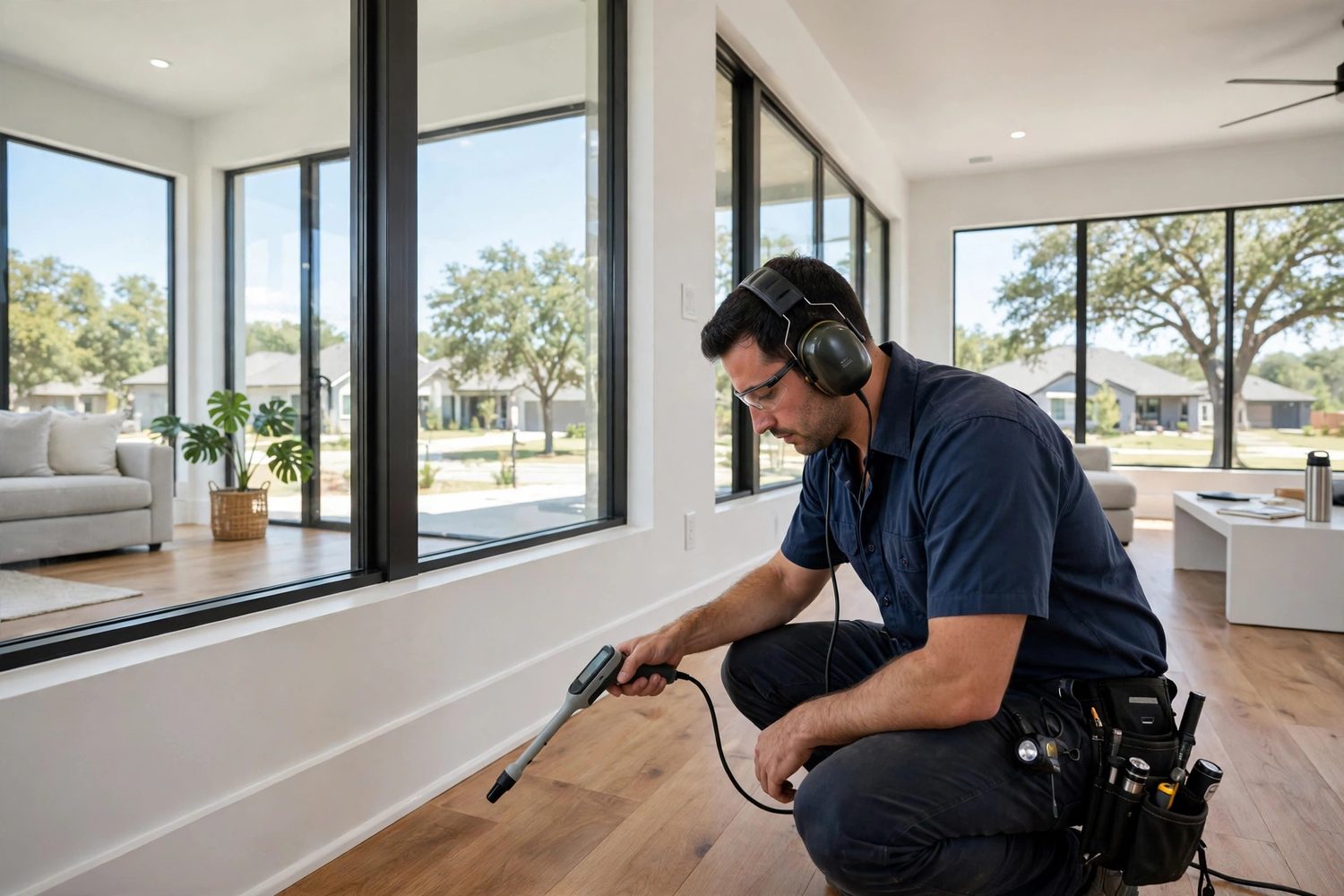
Here's the frustrating truth about hidden leaks: the meter test tells you a leak exists, but it can't tell you where. If the indicator spins, the toilets pass, the rooms are dry, and the yard looks normal, the leak is likely somewhere you can't see — behind a wall, under the slab, or in a line buried in the yard. That's the point where DIY checks have done their job (you've confirmed the problem and ruled out the easy stuff) and specialized equipment takes over. Acoustic listening gear picks up the hiss of pressurized water escaping a pipe, and thermal imaging spots the temperature difference a leak leaves in a slab or wall — both of which are used every day in water leak detection work across Keller.
One special case: if the meter's leak indicator is spinning fast, or you've found water spreading across a floor, that's not a wait-and-see situation — it's an active leak, and the fastest way to limit damage is to shut off your main water valve. And if the signs point under the slab specifically — warm floors, the sound of running water, cracks with moisture — head straight to our slab leak detection page, since slab leaks in Keller's clay soil have their own playbook. Ready.gov's home water guidance is also worth a look for keeping water damage contained while you wait for help.
Most of it, yes. The meter test and the room-by-room walk in this guide will catch the majority of household leaks — running toilets, dripping fixtures, supply-line seeps — with no special tools. Where a professional earns their keep is the leak you can prove but can't locate: water moving through a wall cavity, under a slab, or in a buried line. Acoustic sensors, thermal cameras and pressure testing find those without tearing the house apart, which is why a confirmed-but-invisible leak is the right moment to call.
A quick meter glance once a season is plenty for most homes, plus a walk-through after anything stressful for plumbing — the freeze events North Texas gets every few years, a hail storm that rattled the roof, or any plumbing work. In Keller specifically, check the irrigation system every spring when you fire it up and the backflow preventer after the first hard freeze, since those two account for a big share of the mystery-bill calls we see.
Almost always, with one caveat: make sure nothing was legitimately using water during the test. Ice makers, water softeners in a regeneration cycle, whole-house humidifiers, pool auto-fill valves and irrigation timers all draw water on their own and will move the dial. Redo the test with those confirmed off. If the meter — or the little leak triangle — still moves with everything truly off, water is going somewhere unaccounted for, and that's a leak by definition.
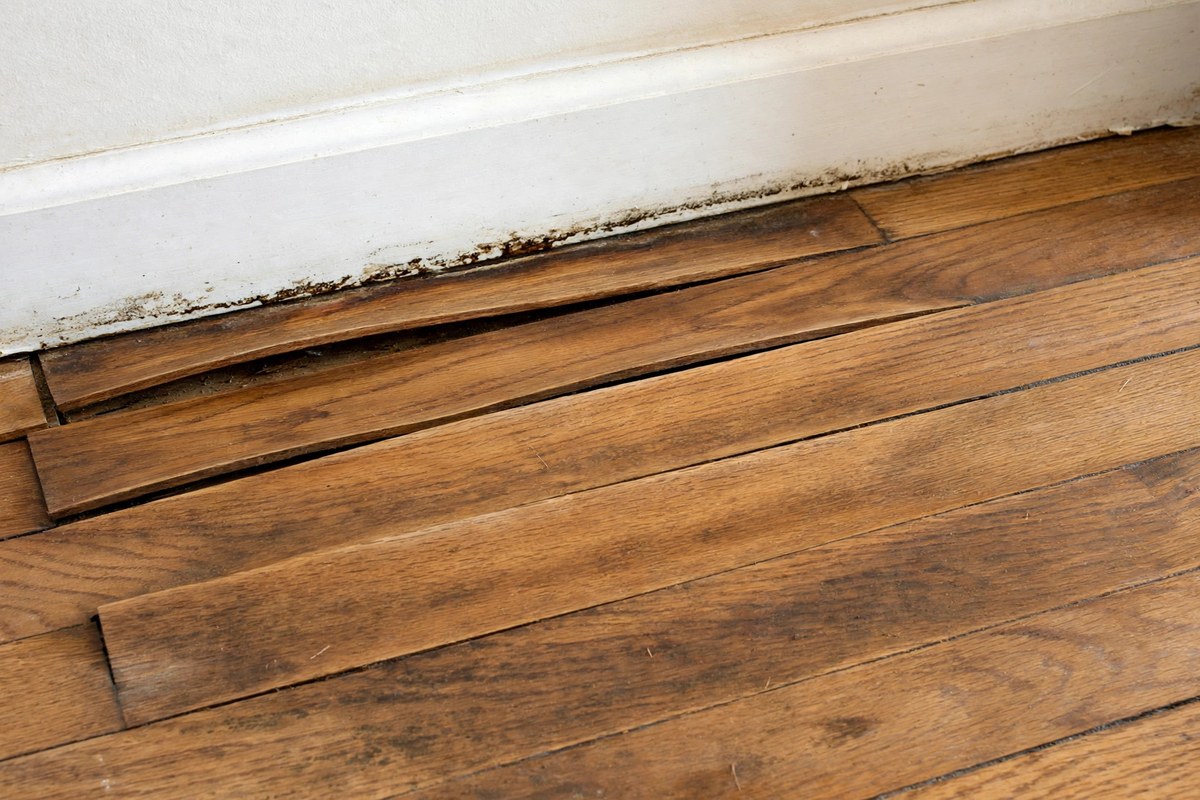
The answer splits in two: the damage your slab leak causes is usually covered, the pipe repair usually isn't. Here's how Keller homeowners navigate the claim.
Read the guide →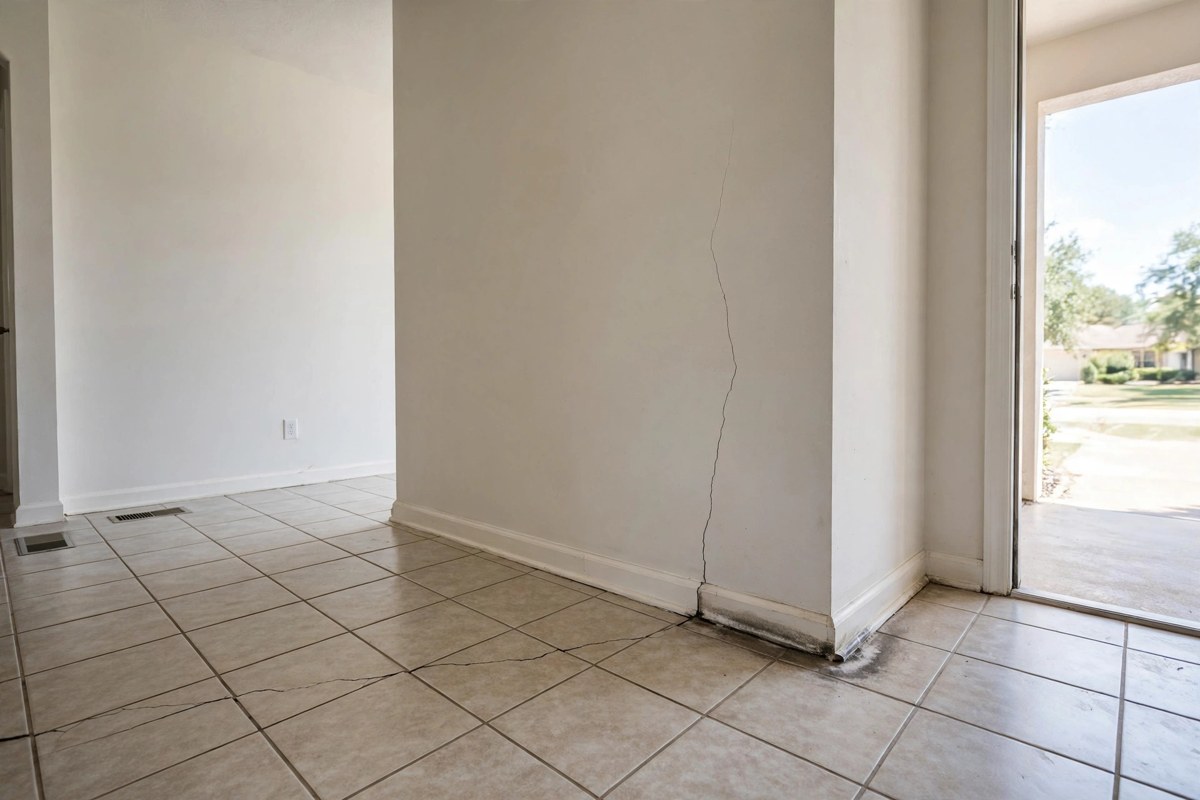
Cracks and sticking doors do not prove a foundation failure. Here is how Keller homeowners separate a hidden slab leak from ordinary clay-soil movement, step by step.
Read the guide →Fast response across Keller · Non-invasive equipment · Up-front explanation of your options
