The damage is usually covered; the pipe repair usually isn't. Here's how Keller homeowners document, file and win a slab leak claim.
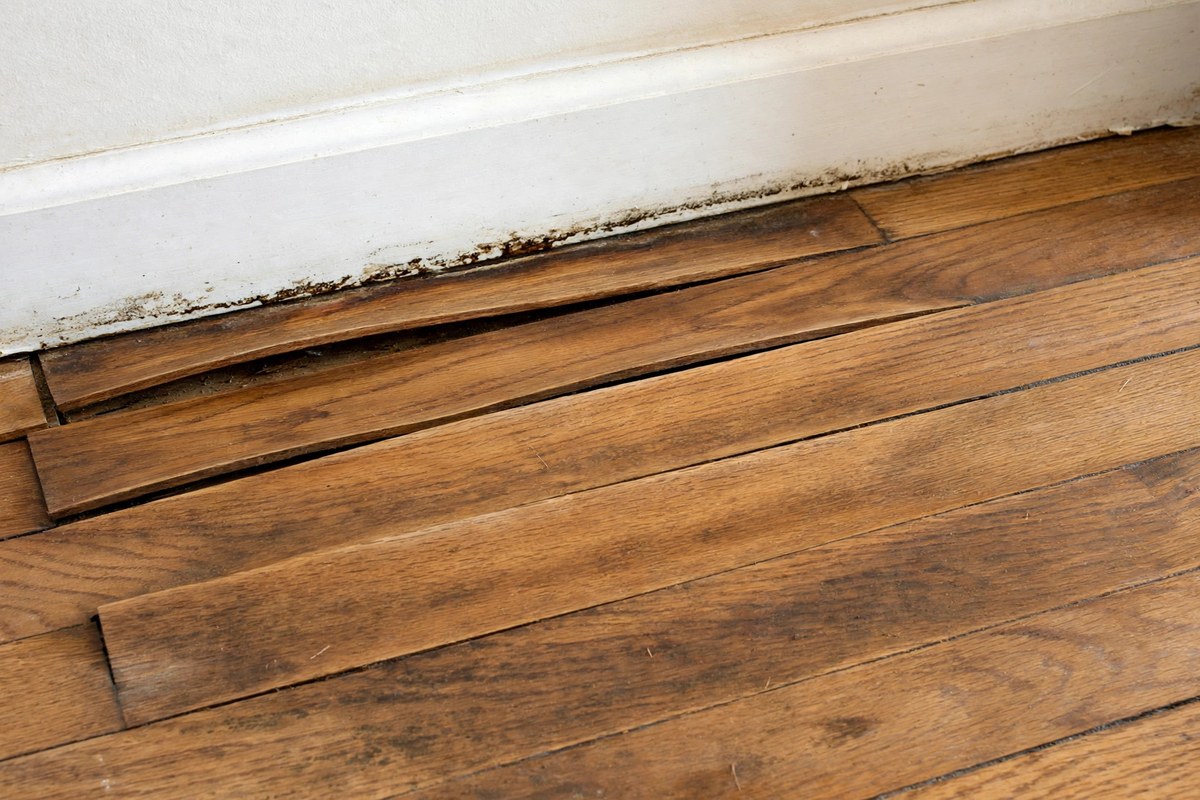
Here is the answer most Keller homeowners are really looking for: a standard Texas homeowners policy usually pays for the damage a slab leak causes, but it usually does not pay to fix the leaking pipe itself. Those are two different things in the eyes of an insurer, and most claim arguments — including most claim denials — come down to confusing one for the other.
The typical Texas policy (most Keller homes carry an HO-3 form, often the state's HO-A variant) covers 'sudden and accidental' discharge of water from plumbing. A pipe under your slab that springs a leak out of nowhere fits that definition. The flooring it ruins, the drywall it soaks, the cabinets it warps — that resulting damage is the bread and butter of a covered water damage claim.
The pipe itself is another story. A deteriorating copper or galvanized line under concrete falls under the wear-and-tear and deterioration exclusions that sit in nearly every policy. Think of it the way insurers do: they cover what the leak did, not what the leak is. Understanding that split before you call your agent is worth more than anything else in this article.
When a slab leak is sudden and documented, a typical Keller claim covers the trail of destruction the water leaves through the house:
Every policy is different, and the declarations page tells the truth about yours. Some insurers sell water-damage endorsements that broaden this coverage; others narrow it. The one habit that costs Keller homeowners nothing: read the water damage and exclusions sections of your policy before you ever need them, not while standing in a puddle.
Also note that coverage applies to your dwelling and usually your personal property damaged by the water. It does not apply to the neighbor's property, and if your slab leak damages a neighbor's unit or a shared foundation element in a townhome, that's a conversation between insurers — another reason a dated leak detection report is gold.
One more covered-category homeowners miss: professional slab leak detection costs are sometimes recoverable within the claim, particularly when the insurer's own adjuster can't locate the leak. Ask your adjuster before you pay out of pocket — the worst answer you can get is no.
The denial side of the ledger matters just as much. Here is what a standard Texas policy typically refuses to pay for in a slab leak situation:
The practical lesson of this list is documentation and speed. The faster a slab leak is found, documented and mitigated, the fewer exclusions an adjuster can plausibly invoke. A leak caught in week two looks 'sudden and accidental.' The same leak caught in month fourteen looks like neglect. Our guide to the difference between slab leaks and foundation problems also helps here, because the sooner you know which problem you actually have, the sooner the clock stops running against you.
Now the part that makes slab leak claims in Keller harder than in most of the country: our clay soil. North Texas clay swells when it rains and shrinks when it bakes, and that seasonal heave is brutal on concrete slabs. It also gives insurers a ready-made alternative explanation for every crack, damp spot and uneven floor in your house — earth movement, one of the most absolute exclusions in a homeowners policy.
This is where claims are won and lost. An insurer presented with a slab leak claim can argue that the damage is really foundation movement, which is excluded, rather than water damage from a plumbing failure, which is covered. You cannot win that argument with a phone call. You win it with evidence: a leak detection report showing an active, located pipe leak; a timeline showing damage that appeared in days or weeks rather than years; photos of water staining distinct from settlement cracking.
Keller's housing stock makes this especially relevant. Much of the city was built in the 1980s through the 2000s on expansive clay, and foundation companies are a permanent part of the local landscape. When your house shows both a slab leak and settlement cracks — common in this soil — the insurer's adjuster is incentivized to see only the settlement. A homeowner armed with a professional detection report and dated documentation is in a completely different negotiating position than one with a vague story about damp floors.
If a claim is denied on earth-movement grounds and you believe the denial is wrong, you have options: the Texas Department of Insurance maintains consumer complaint and appeal resources at tdi.texas.gov, and a public adjuster can re-present the claim with the evidence properly framed. Don't accept a one-sentence denial as the final word.
If you have a confirmed slab leak and real damage, work the claim in this order — every step either strengthens your position or removes an excuse for denial:
Two Keller-specific notes on this process. First, if your home shows the classic double symptom — a leak and settlement-style cracks — get the detection done before the adjuster's visit, so the plumbing failure is an established fact, not your assertion. Second, don't agree to a recorded statement about timelines ('when did you first notice it?') before you've checked your own documentation; 'I don't remember exactly, here's my dated photo log' beats a guessed date that later contradicts the evidence.
The strongest insurance strategy is the one that starts before there's a claim at all — and for a slab leak, it's remarkably simple. Know your policy's water damage language now, while the floors are dry. Ask your agent outright whether your form has any slab-specific endorsements or water-damage caps, and what it would take to add them. That five-minute call costs nothing and removes the worst surprise an adjuster can deliver.
Then build the detection habit. Most slab leaks announce themselves long before they flood: a water bill that climbs for no reason, a warm spot on the floor, the meter test we describe in our water bill guide, or the sound of water running when every fixture is off. Keller homeowners who run a quick check after the extremes — deep summer drought, the occasional hard freeze — catch leaks in the 'sudden and accidental' window instead of the 'long-term seepage' one. That timing difference can decide a claim.
Finally, keep the contact for leak detection somewhere you'll actually find it at 10 p.m. on a Sunday — your phone's contacts, not a drawer. When a slab leak is confirmed quickly, documented professionally and reported promptly, the insurance question in the headline stops being a fight and becomes a process. That is the entire difference between a claim that pays and a claim that dies in an exclusion.
Usually not. Most Texas homeowners policies exclude wear and tear, and a deteriorating pipe under the slab falls into that bucket. What the policy typically does cover is the damage the water caused — ruined flooring, soaked drywall, damaged cabinets. Read your policy's exclusions, and ask your agent directly about the pipe repair question before you file, so there are no surprises.
This is where claims get tricky in Texas. Policies commonly exclude earth movement — the clay soil shifting under Keller homes — so an insurer may attribute damage to settlement rather than the leak. That's why documentation matters: a professional leak detection report showing an active plumbing leak, plus evidence the damage appeared quickly, helps keep the claim on the plumbing side of that line rather than the foundation side.
Yes — it's one of the strongest moves you can make. The report proves a leak exists, locates it, and creates a dated record that separates a sudden failure from long-term seepage. Insurers draw that line constantly, and homeowners who can show a written report almost always have an easier time than those working from memory and a wet floor. Our guide to how to find a slab leak walks through what that testing involves.
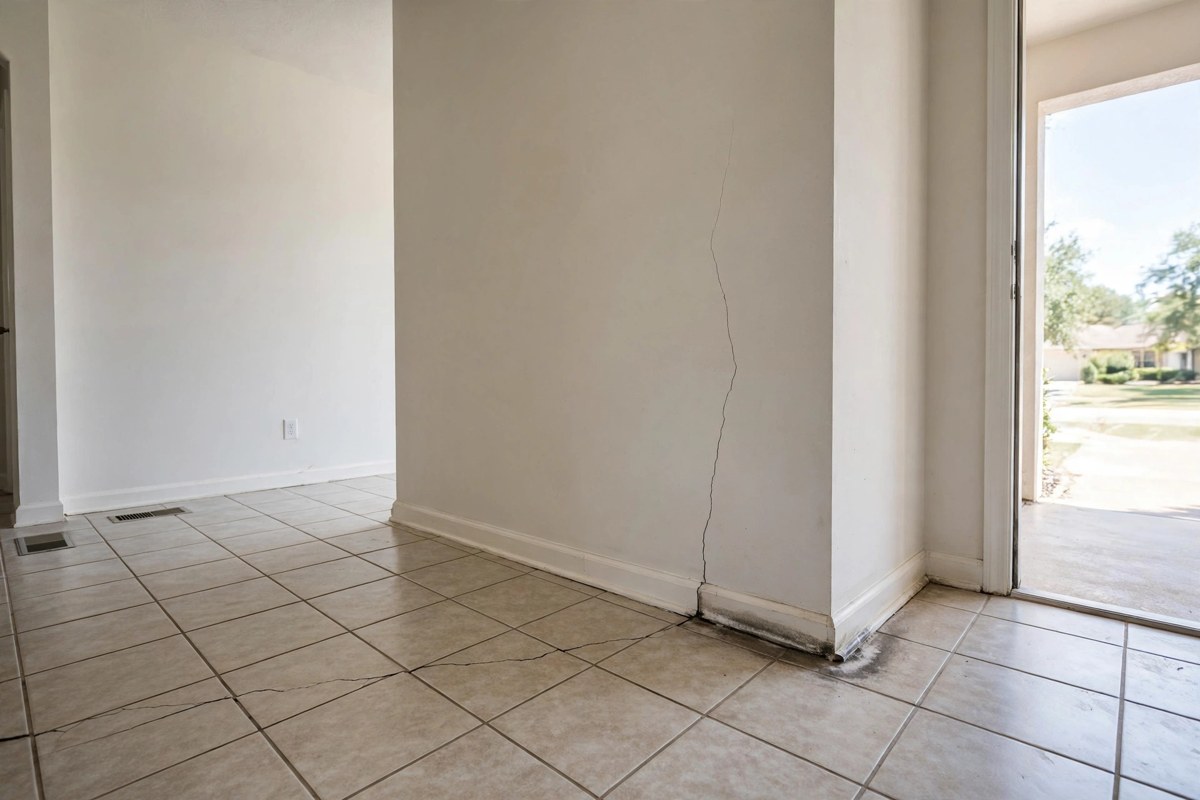
Cracks and sticking doors do not prove a foundation failure. Here is how Keller homeowners separate a hidden slab leak from ordinary clay-soil movement, step by step.
Read the guide →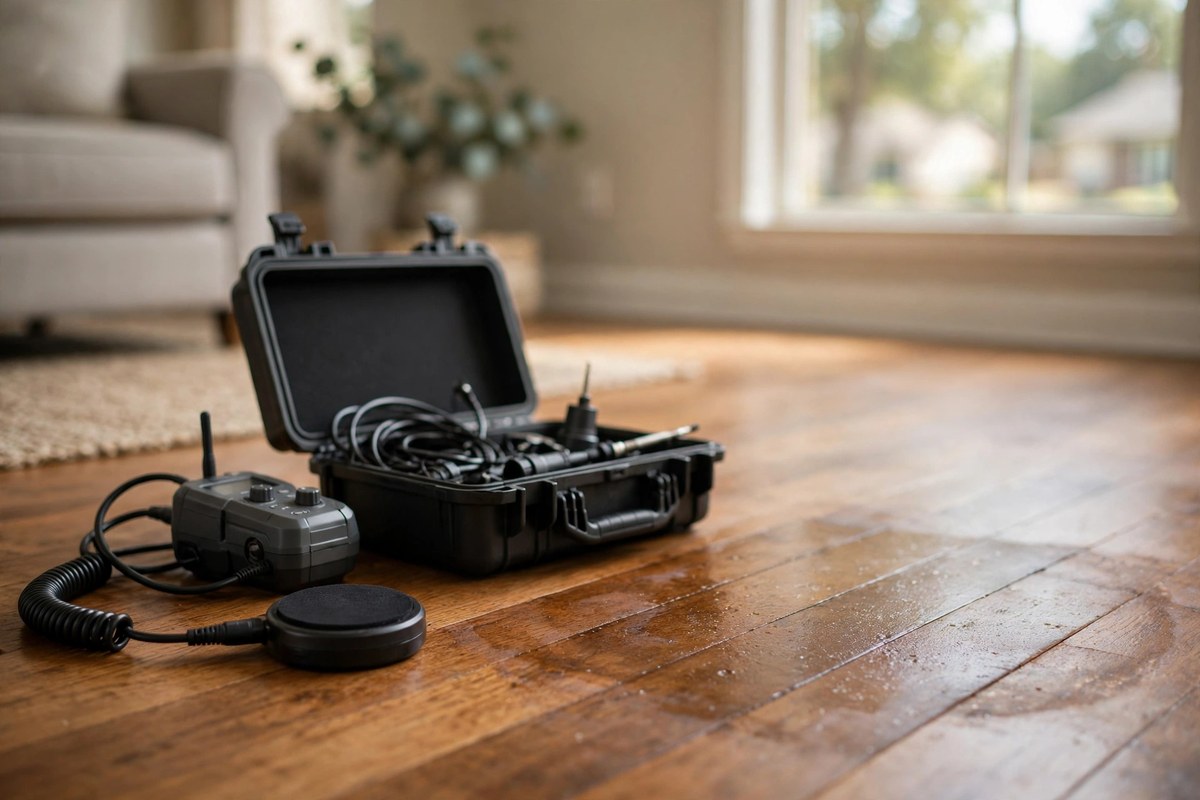
You cannot see a pipe under concrete, but you can test for it. Meter checks, warm floors and quiet-house listening — the step-by-step way Keller homeowners find a slab leak.
Read the guide →Fast response across Keller · Non-invasive equipment · Up-front explanation of your options
