A crack, a sticking door and a damp floor can point in two very different directions. The water clues — not the crack alone — tell you which problem you actually have.
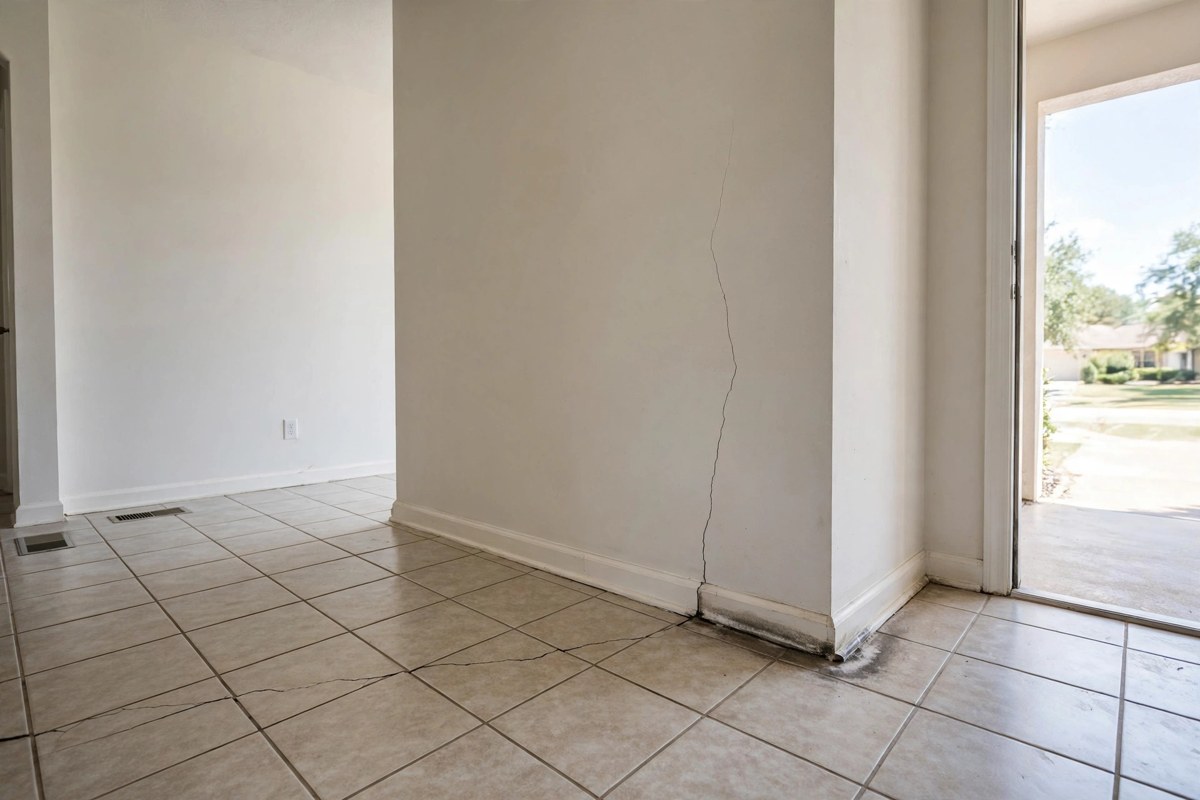
When a Keller homeowner asks whether they are facing a slab leak or a foundation problem, the confusion is completely understandable. The two problems share a wardrobe. Both can crack tile and drywall, make a door start sticking in its frame, open a gap along a baseboard, and leave one room feeling subtly uneven underfoot. Staring at the crack itself will rarely settle it, because a crack is only a symptom — and in North Texas, it is a symptom with more than one common cause.
Start with the ground every Keller home stands on. Most of the city sits on expansive clay soil that swells when it holds moisture and shrinks hard in a dry Texas summer. A slab-on-grade foundation rides that slow seasonal movement, and in neighborhoods from Hidden Lakes to Woodford and the older streets near Bear Creek Park, hairline cracks and doors that stick in August and swing freely in spring are often just the clay breathing. That ordinary movement is real, and it is common — which is exactly why a plumbing leak hiding under the same slab gets misread as 'just foundation settling' for months.
The way out of the confusion is to stop asking what the crack means and start asking what the water is doing. A foundation that is only moving with the seasons is a dry problem. A slab leak is a wet problem, and wet problems leave wet evidence. Every check in this guide is built around that one distinction.
A slab leak announces itself through plumbing behaviour long before it damages structure. The classic cluster is a water bill that rises without a change in habits, a meter that keeps moving when every fixture in the house is off, a water heater that refires at odd hours, and a floor that feels warm in one unexplained spot. If two or more of those are present alongside your cracks, the odds shift sharply toward a leak. Our earlier guide to the signs of a slab leak lists the full pattern, and it is worth comparing your house against it before you call anyone about the foundation.
Location matters too. Leak-driven damage tends to concentrate. One bathroom wall stays damp, one hallway develops a musty smell that never quite airs out, one patch of soil along the foundation line stays dark and soft days after the rest of the yard on streets off Keller-Smithfield Road has dried and cracked. Foundation movement from seasonal clay, by contrast, usually spreads its clues around the perimeter of the house — a crack here, a sticking door there, on different sides — because the whole slab edge is cycling with the weather, not being undermined in one place.
Try the simple meter test before anything else. Turn off every tap, toilet, appliance and irrigation zone, note the meter reading at the curb, and leave the house alone for an hour. If the reading climbs and the low-flow indicator moves, water is escaping somewhere on your side of the meter. A moving foundation does not move a water meter. That single result, described step by step in our guide on how to find a slab leak, is the clearest dividing line a homeowner can draw without any special equipment. The EPA's WaterSense leak-checking guidance relies on the same meter logic for the same reason: the meter counts water, and water does not lie.
Some patterns genuinely do point away from plumbing. Cracks that appear or widen mainly in late summer, then partly close after sustained rain, follow the clay moisture cycle rather than a pipe. Diagonal cracks running from the corners of doors and windows, brick mortar cracks that step through the joints on the outside of the house, and several doors across different rooms all sticking in the same dry season — together, those read as broad soil movement affecting the whole slab, especially on lots where drainage dumps roof water right beside the foundation.
Yard evidence can support that reading. If the soil has pulled visibly away from the foundation edge in a dry spell, leaving a gap you can fit fingers into, and the pattern repeats around most of the house rather than in one damp patch, you are looking at shrinkage, not saturation. Foundation movement also tends to be slow and symmetrical in its story: neighbours in the same Keller subdivision, built in the same years on the same clay, often report the same seasonal sticking doors and hairline cracks.
When all five of those line up and the meter test is clean, it is reasonable to treat the plumbing as innocent for now and focus on drainage, soil moisture consistency around the foundation, and monitoring the cracks with dated pencil marks.
Here is the part that makes this question urgent rather than academic: left running long enough, the first problem creates the second. A pressurized line leaking under a slab saturates one zone of clay while the rest of the lot dries, so that zone swells and heaves while the drier soil shrinks away. The slab, designed to move more or less as one piece, is now being lifted in one area and unsupported in another. That uneven support is what cracks floors, racks door frames out of square, and can eventually damage the foundation in a way that no longer reverses when the leak stops.
A leak can also wash fine soil out from under the slab along the pipe trench, leaving a small void. The concrete above that void loses support and may settle or crack under ordinary loads. This is why timing matters in Tarrant County clay: a leak caught in its first weeks is usually a plumbing repair, while the same leak ignored for a season can become a plumbing repair plus flooring, drywall and foundation work. The damp patch was never the expensive part — the months of uneven soil moisture underneath it were.
That chain of events is also why guessing is risky in both directions. Paying for foundation work while a pipe is still leaking underneath means the movement continues and the new work is undermined. Jackhammering a floor hunting for a leak that does not exist wastes money the other way. The order of operations is always the same: rule the water in or out first with slab leak detection, because it is the faster, cheaper and less invasive test, and only then judge what the foundation itself needs.
Day one, do the meter test described above and write down both readings with times. While the house sits unused, walk it barefoot and note any warm or soft-feeling floor areas, then stand in each doorway and check which doors stick, rub or have uneven gaps at the top — and whether it is one door near a bathroom or doors all over the house. Photograph every crack you find with a coin beside it for scale, and date the photographs.
Day two, work the yard. After at least two dry days, walk the foundation line slowly. Is the soil uniformly dry and pulling away, or is one section near a bathroom or the water heater line still dark, soft and green? Check where your gutters discharge and whether the irrigation system runs a zone along that wall. Many Keller lots slope gently, and a downspout pouring beside one corner can imitate both problems at once. If any indoor damp is involved — a musty room, bubbling paint low on a wall, a cabinet base that stays dark — our water leak detection checklist helps you clear the ordinary indoor sources, from toilet flappers to refrigerator lines, before you conclude the water is coming from under the floor.
By the end of those two passes you will usually have a lean, one way or the other. Meter moving, clues concentrated, one wet zone: treat it as a leak until proven otherwise. Meter still, clues seasonal and spread out, soil dry all around: monitor the foundation and manage drainage. Mixed signals — a moving meter and house-wide cracks — mean both stories may be true at once, which is precisely the case professional testing exists to sort out.
If the water evidence wins, act on the plumbing first and promptly. Limit use on the affected line if the meter shows a fast leak, keep heavy furniture off any floor that feels soft or buckled, and keep your dated notes and photographs — they shorten the pinpointing visit and document the timeline if you later discuss resulting damage with your insurer. Professional slab leak detection uses listening equipment and thermal imaging to place the break accurately through the concrete, so the floor is opened once, in the right spot, rather than explored.
If the water evidence comes back clean, do not simply forget the cracks. Mark their ends in pencil with the date, photograph them monthly, improve any drainage that dumps roof water beside the slab, and try to keep soil moisture around the foundation as even as your watering restrictions allow. A crack that stays stable across a full wet-and-dry cycle is a very different story from one that grows month after month, and your dated record is what turns that judgement from a feeling into a fact.
So, slab leak or foundation problem? In Keller the honest answer is that the crack cannot tell you, but the water can. One hour with the meter, one barefoot walk, and one slow lap around the foundation will tell most homeowners which professional they actually need — and catching a leak before it finishes undermining the slab is the single best way to make sure a plumbing question never becomes a foundation answer.
Look for water evidence, not just the crack. Run the meter test with every fixture off: if the meter moves, water is escaping and a slab leak is likely contributing. Leak damage also tends to concentrate near one bathroom, hallway or damp soil patch, and comes with rising bills or warm floors. Foundation-only movement is usually seasonal, spread around several sides of the house, and comes with a perfectly still meter and no plumbing symptoms.
Yes, over time. A leak saturates one zone of Keller's expansive clay soil while the rest dries and shrinks, so the slab is lifted in one place and unsupported in another. A steady flow can also wash fine soil out along the pipe trench, leaving a void under the concrete. Caught early, it is mainly a plumbing repair; left for months, the same leak can crack floors and rack door frames out of square.
Rule the water out first. A meter test and professional leak detection are faster, cheaper and far less invasive than foundation work, and if a pipe is still leaking, foundation repairs done on top of it will keep moving. If testing proves there is no leak, you can then assess the foundation with confidence — and if both problems exist, fixing the leak first stops the cause before the structure is addressed.
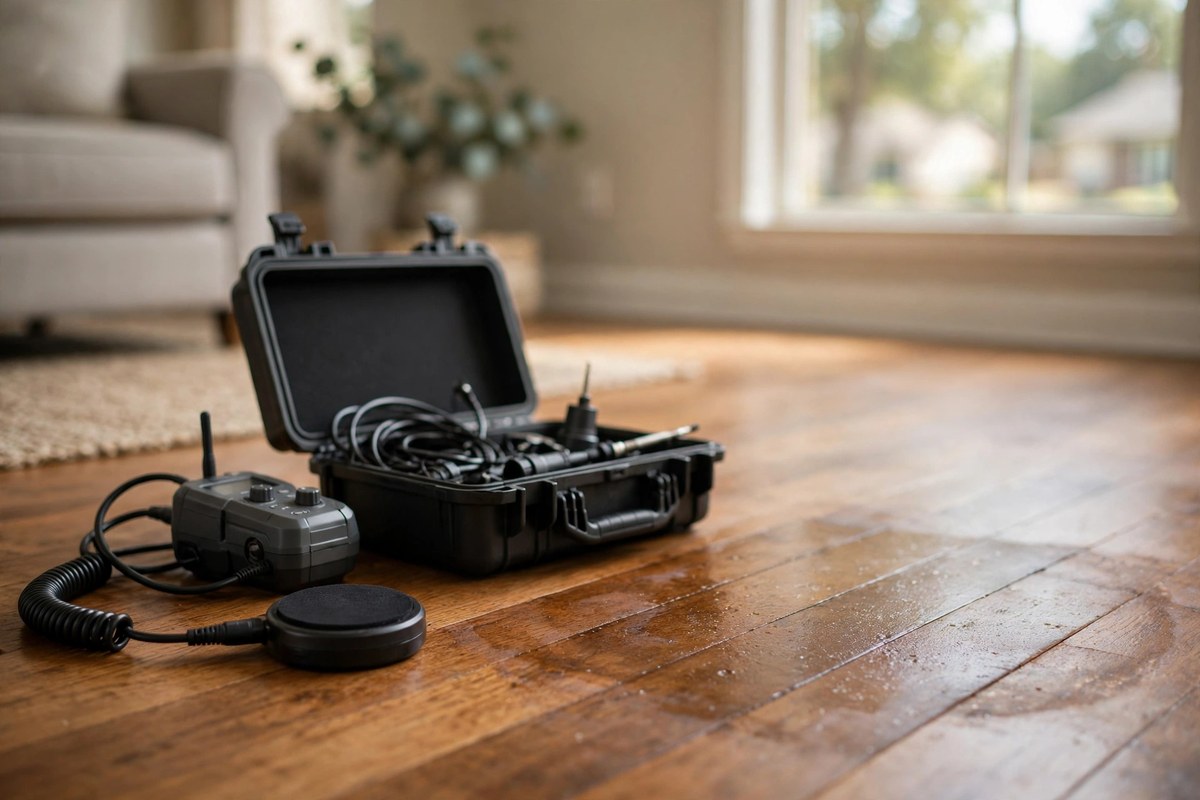
You cannot see a pipe under concrete, but you can test for it. Meter checks, warm floors and quiet-house listening — the step-by-step way Keller homeowners find a slab leak.
Read the guide →
A pencil-thin stream sounds too simple to save a house, but on the right night it does exactly that. Here's when dripping works in Keller, when it doesn't, and how to do it properly.
Read the guide →Fast response across Keller · Non-invasive equipment · Up-front explanation of your options
