A sewer line fails quietly, underground, long before it backs up. These are the early signs Keller homeowners notice — and the point at which to stop guessing and get the line inspected.
Nobody wakes up one morning to a sewer line that has politely announced it is broken. In Keller, the failure usually happens slowly, a few feet underground, where you cannot see it: a joint loosens as the clay soil shifts, a root finds a hairline crack and widens it season by season, an older pipe sags until wastewater starts pooling in the dip. For months the only evidence is inside the house, in small irritations that are easy to explain away.
That slow start is exactly why signs of a broken sewer line are worth learning before you need them. A water supply leak announces itself with a bill or a damp wall. A sewer leak announces itself with drains that behave oddly, a smell that comes and goes, and a patch of lawn that looks suspiciously healthier than the rest. Catch those clues early and the fix is usually a contained repair. Ignore them, and the same break can work its way up to sewage backing into a shower drain or a soggy, sunken stretch of yard — the kind of problem that no longer waits for a convenient appointment.
This guide walks through the signs in the order Keller homeowners tend to notice them, what each one actually means, and what to do — and not do — when more than one shows up at the same time.
A single slow drain is usually a local clog: hair in the shower trap, grease in the kitchen line. A broken sewer line behaves differently. Because every drain in the house eventually joins the same main line on its way to the street, damage to that shared line slows everything downstream of it. The bathroom sink drains sluggishly, the tub takes longer to empty, the kitchen sink gurgles — and plunging one fixture does nothing for the others.
Pay particular attention to the lowest fixtures in the house. In a two-storey Keller home, that is usually a ground-floor bathroom or a laundry drain. When the main line is cracked, partially collapsed or choked with roots, wastewater has nowhere easy to go, so it backs up at the lowest exit first. If you flush an upstairs toilet and the downstairs shower drain burps or fills slightly, that is not a coincidence and it is not a clog in the shower. It is the shared line telling you it cannot carry the flow.
Repeated clogs in the same line are another version of this sign. A drain that needs clearing every few weeks is not being fixed by clearing; something structural is catching debris again and again. A sewer leak detection camera inspection shows what a plunger never will: whether the line is cracked, offset at a joint, sagging, or full of roots.
Gurgling is air, and air in a drain system means something is wrong with the flow. In a healthy line, wastewater moves smoothly and air vents out through the roof. When a break, belly or root mass restricts the pipe, air gets trapped and then released in bursts — which you hear as a toilet gurgling after a shower runs, or a sink bubbling when the washing machine drains.
Homeowners sometimes assume gurgling is a vent problem, and occasionally it is. But vent trouble alone does not usually come with slow drains throughout the house, a sewer smell, or wet patches in the yard. Gurgling plus any of those other signs points to the line itself. Note when it happens, too: gurgling that follows a specific fixture — the toilet gurgles every time the tub drains — is a useful clue for whoever inspects the line, because it suggests where the restriction sits relative to those fixtures.
Do not try to chase this one with bottle after bottle of chemical drain cleaner. Caustic cleaners do nothing for a cracked or root-filled pipe, and repeated use can damage older lines further while masking the symptom for a week or two. If gurgling keeps returning, the line needs looking at, not another chemical.
A sewer smell inside the house has several possible causes, and a broken line is only one of them — which is why it is worth working through the simple ones first. A dry floor-drain trap in a laundry room, a failed wax ring under a toilet, or a blocked vent can all let sewer gas in, and our guide to a sewer smell in house walks through those checks in order.
The pattern that points to a broken sewer line is persistence and spread. The smell does not stay in one bathroom; it drifts, it returns after traps are refilled and drains are cleaned, and it is strongest near the lowest drains or in rooms closest to where the line leaves the house. A crack in the line under or beside the foundation can let gas escape into the soil and find its way in through gaps, while a break further out in the yard may show up as a smell outdoors, near the soggy or sunken ground, even when the house itself smells fine.
Treat a lingering sewer smell as a health matter, not just an annoyance. Sewer gas is unpleasant at low levels and genuinely unhealthy at higher ones, and a smell that will not go away is the house's way of saying the waste system is no longer sealed. Ventilate the room, avoid using the affected fixtures heavily, and arrange an inspection rather than covering the smell with air freshener and hoping it passes.
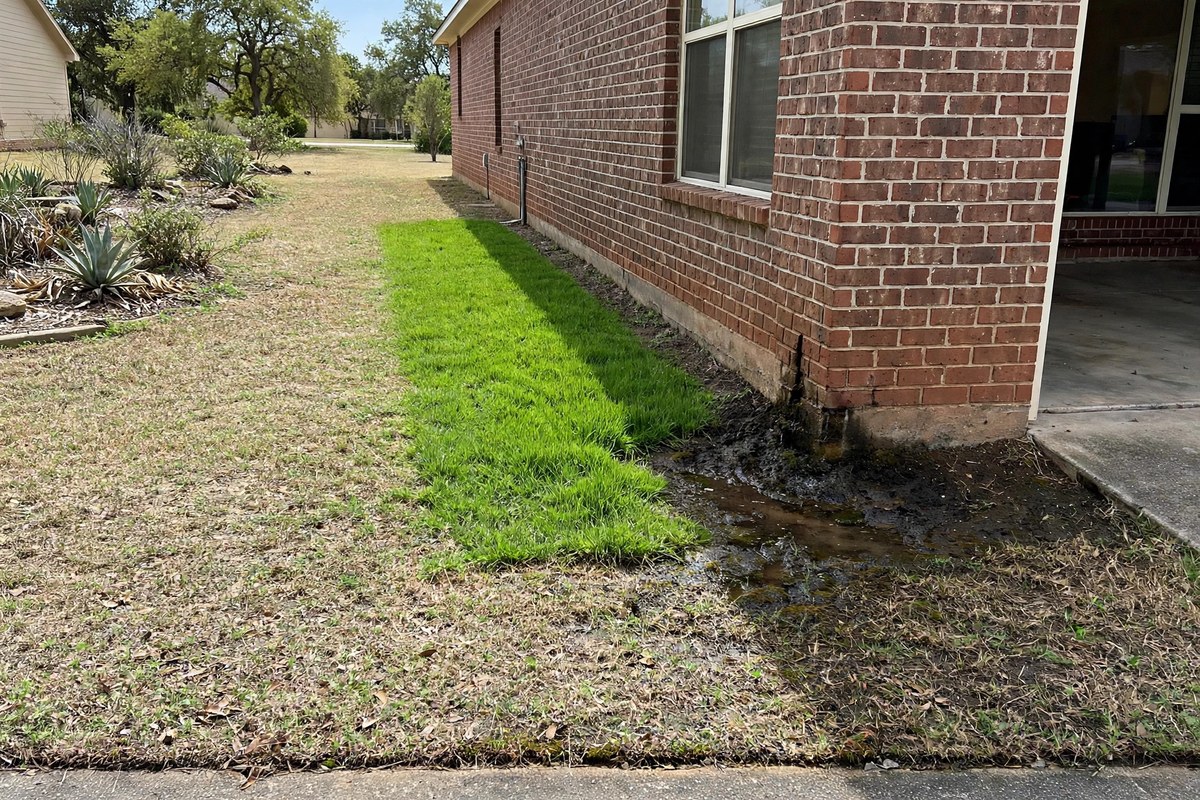
This is the sign most Keller homeowners notice from the driveway, and it is often the clearest. A broken sewer line leaks nutrient-rich wastewater into the soil around it. Grass above the leak gets a constant, unintended feed — so one strip of lawn grows faster, greener and thicker than everything around it, often in a straight line following the pipe's route from the house toward the street. In a North Texas summer, when the rest of the lawn is struggling in the heat, that strip can look almost suspiciously lush.
The other version is a patch that never dries. After a dry spell, when neighbours' yards along Rufe Snow Drive or Keller Parkway have firmed up, one area of yours stays soft, spongy or muddy underfoot. That is wastewater saturating the soil, not a sprinkler overspray — sprinklers do not run in a neat line to the street, and they do not keep one patch wet through a week without rain.
Either version deserves attention even if the drains inside still seem fine. The leak feeding that grass is also washing soil away from around the pipe, which is how a small crack gradually becomes a void, and how a void becomes a sinkhole. A sunken or settling patch of ground above a sewer line is a later-stage sign, and it should not be walked over, driven over or filled in with topsoil before the line underneath has been inspected. Filling the dip hides the symptom while the soil loss underneath continues.
Keller sits on expansive clay soil, which already moves with the seasons — swelling when wet, shrinking when dry — so not every crack in a Keller home is a sewer problem. Most are not. The ones worth connecting to a sewer line are the ones that arrive alongside the other signs in this guide, or that follow a pattern: a crack that widens noticeably over weeks rather than years, a floor that feels uneven near a bathroom or laundry wall, a door that suddenly sticks in a frame that was fine last month.
The mechanism is straightforward. A leaking sewer line saturates the soil beneath or beside the slab, and saturated clay behaves differently from dry clay — it swells, shifts, and, where water washes fine soil away, loses support altogether. The slab above responds with movement. That is also why a sewer break and a slab leak can look alike from inside the house, and why telling them apart matters: our comparison of a slab leak or foundation problem explains how the two are separated, but the short version is that a sewer problem usually brings drain symptoms with it, while a water-line slab leak usually brings a water bill or warm floor with it.
If you are seeing foundation movement together with slow drains, gurgling or a soggy yard, do not start with a foundation contractor alone. The leaking line is the cause to find first; stabilising a slab over an active leak treats the symptom while the soil underneath keeps changing.
Understanding the cause helps you judge how urgent a sign is. In Keller, three forces do most of the damage. The first is the clay soil itself: seasonal swelling and shrinking flexes buried pipes year after year, stressing joints until they separate slightly or crack. The second is tree roots. Live oaks, pecans and other large trees common in Keller yards send fine roots toward the moisture in a sewer line; a hairline crack is an invitation, and once inside, roots grow into a mat that blocks flow and widens the opening.
The third is age and material. Older Keller neighbourhoods still have clay tile or cast-iron sewer lines, both of which corrode, scale and crack with decades of use, while even newer PVC lines can sag — developing a belly — if the trench bedding settles unevenly. None of this is a homeowner's fault, and none of it is fixed by being careful about what goes down the drain, though flushing wipes, grease and feminine products certainly makes a damaged line worse faster.
The practical point is that sewer lines do not heal. A root mat does not dissolve, a separated joint does not reseal, and a belly does not level itself. Every one of these causes gets worse on roughly the same schedule: slowly, then suddenly, when a partial blockage becomes a full backup. That is the argument for inspecting at the first cluster of signs rather than waiting for the backup that forces the issue.
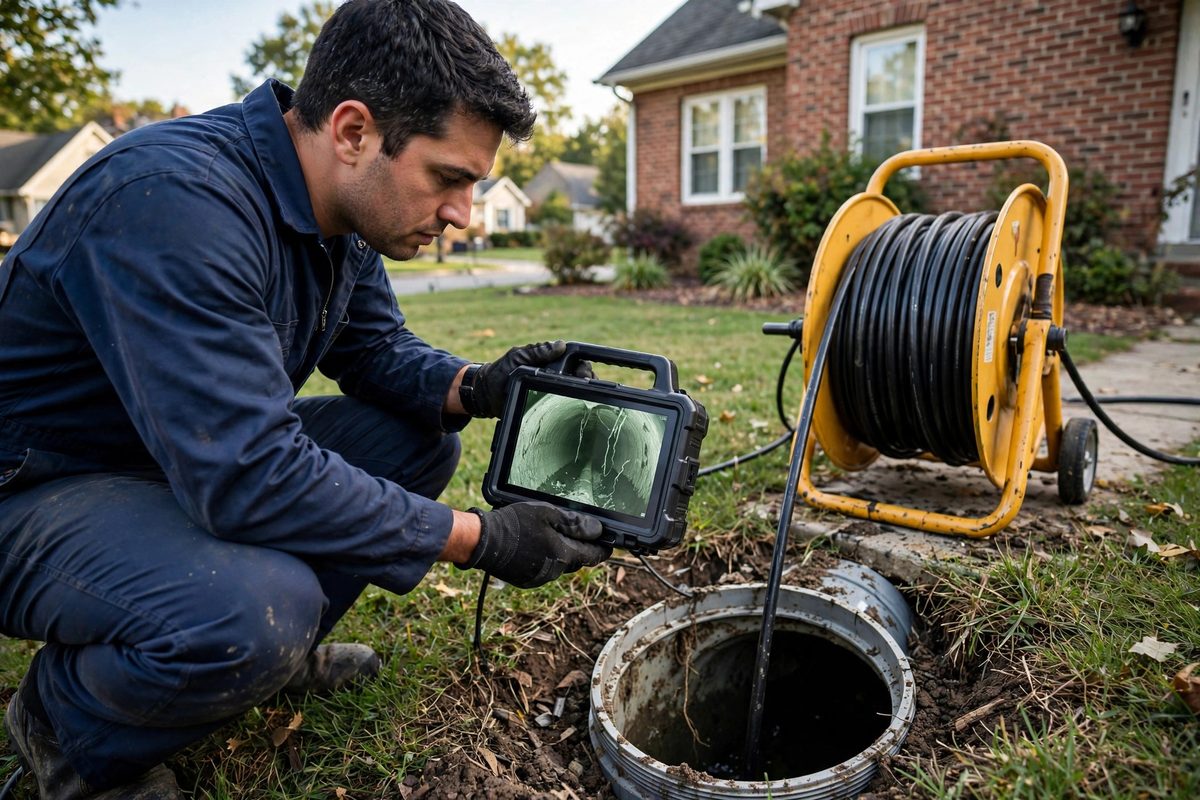
One sign on its own — a single slow drain, a faint smell in one bathroom — is worth watching and checking through the simple causes first. Two or more together, especially slow drains plus gurgling, or a smell plus a soggy patch, is the point to stop troubleshooting and get the line inspected. The inspection that matters is a camera inspection: a small camera run through the line shows the break, the roots, the belly or the collapse on screen, with its distance from the house marked, so any repair targets the actual fault instead of guessing at it.
While you wait, a few practical steps help. Reduce water use through the affected line where you can — shorter showers, fewer simultaneous loads — so a partial blockage is less likely to become a backup. If sewage has already backed up into a fixture, stop using that fixture, keep the area clear, and clean and disinfect anything it touched; wastewater is not grey water and should not be mopped up casually. And if the problem is urgent — sewage actively backing up, or a rapidly sinking patch of yard — treat it as an emergency leak rather than a routine booking.
What not to do matters just as much. Do not keep clearing the same drain and calling it fixed. Do not pour chemical cleaners down a line you suspect is broken. Do not fill a sinkhole or soggy dip with soil before the pipe beneath it is checked. And do not assume the city will handle it: in Keller, as in most Texas cities, the homeowner is generally responsible for the sewer lateral from the house to the city main, which is exactly the section these signs point to. The U.S. Environmental Protection Agency's guidance on septic and wastewater systems is a useful general reference on how household wastewater systems work and why keeping them sealed matters.
Finally, keep a simple record before the inspection: which fixtures are slow, when the gurgling happens, where the yard is wet or green, and when you first noticed each sign. That timeline helps whoever inspects the line connect the indoor symptoms to the underground fault, and it gives you a clear baseline if the problem needs monitoring. A broken sewer line is an unwelcome discovery, but it is a far better discovery at the slow-drain stage than at the sewage-in-the-shower stage — and the signs in this guide are how you make sure you find it at the earlier one. For the wider picture of hidden leaks in a Keller home, our guide on water leak detection covers the supply-side checks that pair with this sewer-side list.
It can create a genuine health concern, which is why sewage backups and persistent sewer smells should not be treated as a nuisance to live with. Wastewater carries bacteria, and a break can also let damp and mould take hold in walls and floors. If sewage is coming up through a drain or toilet, stop using the affected fixtures, keep children and pets away from the area, and get the line checked promptly rather than waiting to see whether it clears on its own.
Not necessarily. The first step is finding out exactly where the problem is and how bad it is, usually with a camera inspection of the line, before anyone talks about digging. Some breaks are localised — a single cracked joint or a root intrusion at one spot — while others involve a longer collapsed or bellied section. Knowing the location and extent first is what keeps a repair focused instead of turning into a yard-wide excavation.
A simple clog usually affects one fixture: one slow toilet, one backed-up sink. A broken or badly damaged sewer line tends to show up in several places at once — multiple slow drains, gurgling in a toilet when another fixture runs, backups on the lowest level of the house, or outdoor signs such as a soggy patch or an unusually green strip of lawn. When several of those appear together, the problem is almost certainly in the shared line, not in a single drain.
A sewer smell that comes and goes is rarely just a dirty drain. Work through the usual causes in order — dry traps first, then vents, wax rings and the sewer line itself — before it becomes a bigger problem.
Read the guide →
The house is quiet, every tap is off, and yet somewhere behind the plaster you can hear water moving. That sound is worth taking seriously — here is how to work out what it is.
Read the guide →Fast response across Keller · Non-invasive equipment · Up-front explanation of your options
