A sewer smell is your plumbing's earliest warning — usually a dry trap or a worn seal, sometimes a line problem. Here's how to find which one it is.
Every Keller homeowner knows the moment: you walk into a bathroom or a hallway and catch a whiff of something that smells like a sewer, and your first instinct is to blame the drain. Sometimes that instinct is right. But a sewer smell in house problems is rarely about dirt alone. It is your plumbing telling you that somewhere, the barrier between your living space and the sewer system has failed — a trap has dried out, a seal has worn through, a vent is blocked, or a line underground has cracked.
That barrier matters. Every drain in your home is supposed to hold a small plug of water in a curved trap, and every vent pipe is supposed to carry sewer gas safely up through the roof. When those two systems work, you never smell the sewer at all, no matter how close it runs under your floors. When either one fails, gas finds the easiest path back inside, and it usually picks the room you use least or the drain you notice last.
Keller adds a few local wrinkles. Many homes here sit on expansive clay soil that swells when wet and shrinks in a dry spell, and that slow seasonal movement works on buried sewer lines year after year. Older neighborhoods near Old Town Keller and along the streets off North Main have original cast iron or clay sewer lines that are simply aging out. And in newer subdivisions, a guest bathroom or a basement-style bonus room can sit unused for weeks at a time, which is all a trap needs to dry out. The good news is that most sewer smells have a short list of causes, and you can work through them in order before calling anyone.
Start with the simplest and most common cause: a dry trap. The U-shaped bend under every sink, tub and shower holds a few inches of water, and that water is the seal. If a fixture goes unused for two or three weeks — a guest shower, a spare bathroom, a floor drain in the laundry room or garage — the water evaporates, the seal breaks, and sewer gas drifts straight up the drain into the room.
The fix is almost embarrassingly easy: run water in every drain you rarely use, for about thirty seconds each, including the tub and shower. Pouring a tablespoon of mineral oil into a floor drain after refilling it slows evaporation and buys you weeks, which is a handy trick for drains you truly never use. If the smell disappears within a day of refilling the traps, you have found your answer, and the only ongoing job is to run those fixtures once a month. Our guide to how to check for a water leak covers a similar room-by-room routine that pairs well with this one.
One caution: if you refill a trap and the smell comes back within a day or two, the trap is not just drying out — it may be siphoning. That happens when a blocked or poorly sized vent lets a draining fixture pull the water out of a nearby trap. That is a vent problem, and it leads to the next cause on the list.
Plumbing vents are the pipes that poke through your roof, and they do two jobs: they let air into the drain system so water flows smoothly, and they carry sewer gas up and away from the house. When a vent is blocked — by leaves, a bird's nest, ice in a rare hard freeze, or a cap that was never removed after roofing work — the system cannot breathe. Drains gurgle, toilets flush sluggishly, and traps get siphoned dry, which brings the smell back again and again.
In Keller, vent trouble often shows up after a big storm drops debris on the roof, or after a roofing crew works on the house and a vent gets covered or knocked askew. From the ground you can sometimes spot a vent that looks bent or capped, but do not climb onto the roof to investigate it yourself. Note the symptoms instead: gurgling after a flush, a toilet that bubbles when the washing machine drains, or a smell that appears only when a particular fixture runs. Those details help a professional find the blockage quickly.
A vent that terminates in the attic rather than through the roof is a different problem — an installation fault that dumps sewer gas into the house itself. It is rare in Keller, but it happens in remodels and additions where a vent was never properly extended. If your smell is strongest in an attic-adjacent room or near a remodeled bathroom, mention that history when you call for help; it changes where the search starts.
If the smell is strongest around one toilet, look at the wax ring. That ring of wax seals the base of the toilet to the flange on the floor, and it wears out over time — faster if the toilet rocks even slightly when you sit on it. A failed wax ring lets sewer gas seep out around the base, often without any visible water at all, because gas escapes long before liquid does. Other signs include a toilet that wobbles, a soft or discolored patch of flooring around the base, or a faint dampness that never quite dries.
A rocking toilet is not a quirk to live with. It means the seal is being worked loose a little more with every use, and the longer it goes, the more likely a real leak follows. Tightening the floor bolts sometimes helps, but a crushed or aged wax ring needs replacing, and that is a job worth doing properly — a toilet pulled and reset badly can crack the flange and turn a small seal job into a floor repair.
Under sinks, the suspects are simpler: a slip-joint connection that has worked loose, a trap that was never tightened after a repair, or a drain hose from a dishwasher that has slipped out of its high loop. Get down with a flashlight and look for dampness, staining or a faint smell right at the joints. A loose connection usually announces itself with a little moisture as well as odor, and tightening it — or having it tightened — ends the problem the same day.
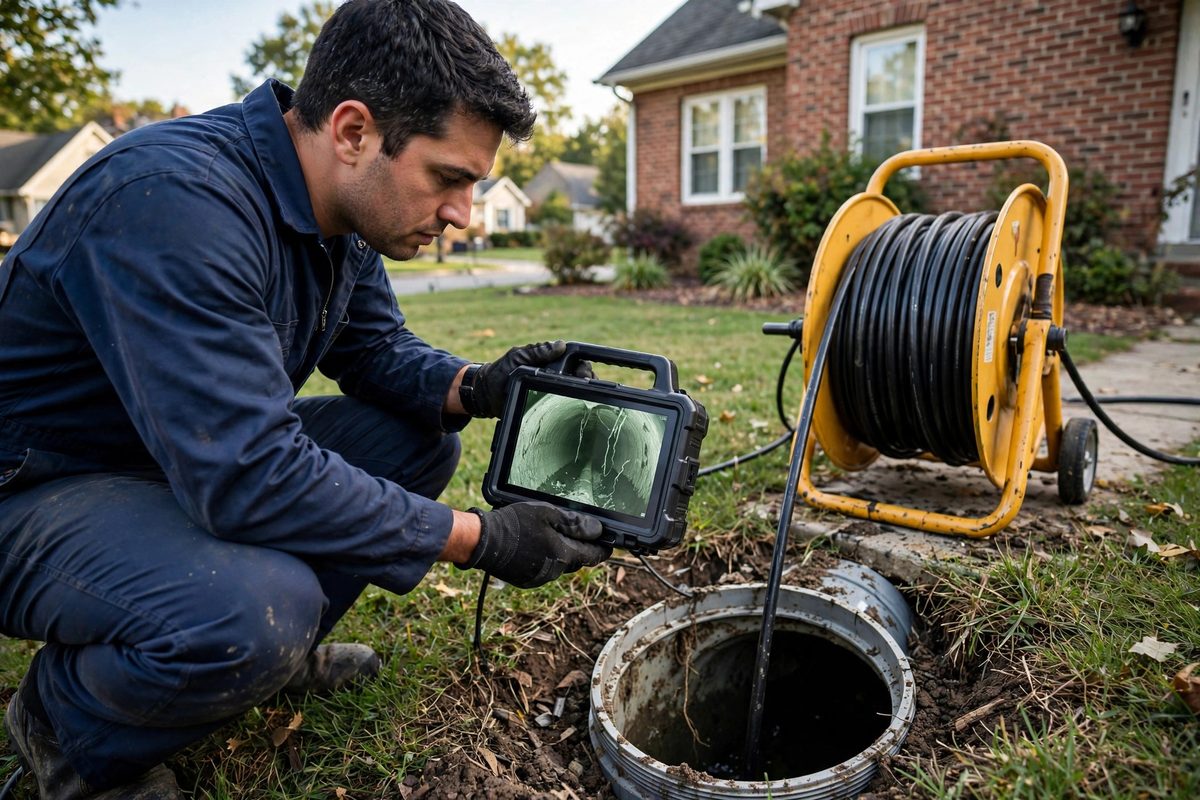
If you have refilled the traps, checked the toilet and found nothing loose, and the smell persists across several rooms or keeps returning, the problem may be underground. A cracked or broken sewer line lets gas escape into the soil and then into the house through foundation gaps, and it often brings other symptoms with it: drains that are slow all over the house, gurgling in fixtures you are not using, soggy or unusually lush patches in the yard, or a damp spot near the foundation. In Keller's clay soil, the cycle of swelling and shrinking can shift a buried line just enough to open a joint or crack an aging pipe, and tree roots — live oaks and pecans are the usual culprits in this town — find those openings and widen them.
This is where guessing stops being useful. A sewer line cannot be inspected from inside the house, and the difference between a broken line, a root intrusion and a failing connection matters for what comes next. Professional sewer leak detection uses cameras and listening equipment to find the exact break instead of digging up the yard on a hunch, and that precision is what keeps a repair small. If several drains are slow at once, if sewage has ever backed up, or if the yard shows a wet patch that does not match the weather, treat it as a line problem until proven otherwise and get it checked promptly.
Homes on septic systems have one extra suspect: a full or failing tank can push gas back through the drains, especially after heavy rain or heavy use. The EPA's septic system guidance explains the maintenance schedule that keeps a system working — regular pumping and care, not emergency calls. Keller homes on city sewer do not have this worry, but if your home sits on septic, a smell that follows a big laundry day or a houseful of guests is a sign the tank deserves attention.
Work through this in order, and write down what you find. The pattern is often more useful than any single observation:
If the checklist ends with a dry trap or a loose joint, you have likely solved it. If it ends with several rooms, several slow drains, a yard patch or a smell that will not stay away, the next step is professional detection rather than another round of drain cleaner — chemicals will not seal a cracked line, and they can damage the pipes they are poured into.
One distinction matters more than all the rest. Natural gas is odorless on its own, so utilities add a rotten-egg smell — mercaptan — precisely so you notice a leak. Sewer gas smells similar, and in a worried moment the two are easy to confuse. The rule is simple: if you are not sure which one you are smelling, assume it could be natural gas. Do not flip light switches, do not light anything, leave the house, and call for help from outside. A sewer smell that you can trace to a dry guest bathroom is one thing; a strong, sudden rotten-egg smell through the whole house is another, and it should never be investigated by sniffing around the water heater.
For the same reason, never ignore a smell just because it is faint. Sewer gas in small, steady amounts can cause headaches and nausea, and it signals a broken seal that will only get worse. The homes that avoid real damage are the ones where someone took the first faint whiff seriously, worked the checklist, and called for emergency leak detection when the checklist did not explain it. A prompt visit costs far less than the floor, foundation or health problems a hidden line break can cause if it runs for months.
Keller homeowners who catch this early usually find the cause is small — a trap, a ring, a joint. The ones who wait usually find it is not. Either way, the smell itself is doing you a favor: it is the earliest warning your plumbing gives, well before water stains a ceiling or a bill jumps. Take it at face value, work the list, and if the list runs out before the smell does, bring in detection equipment and find the real source. If you are also seeing unexplained water use or damp spots, the checks on our water leak detection page will help you tell a sewer problem from a supply-side leak.
In small amounts from a dry trap, it is mostly unpleasant rather than an emergency, but sewer gas should never be ignored. It can carry methane and hydrogen sulfide, and at higher concentrations it can cause headaches, nausea and dizziness. If the smell is strong, if anyone feels ill, or if you cannot tell whether it is sewer gas or a natural gas leak, leave the house, get fresh air, and call for help from outside. A smell that is strong, persistent or spreading through the whole house deserves a prompt professional check, not a bottle of drain cleaner and hope.
Because the cause itself comes and goes. A guest bathroom trap dries out between visits, then refills when someone finally uses it. A vent problem only shows up when wind blows a certain way or when a big drain — a washing machine, a tub — pulls hard on the system. A cracked sewer line may only leak odor when the ground is wet, or when the line is under load. That on-and-off pattern is actually useful information: note when the smell appears, which fixtures were just used, and whether it follows rain. That pattern often points straight at the source.
A smell confined to one room almost always has a local cause in that room: a dry trap in a rarely used shower or tub, a worn wax ring under that toilet, a loose drain connection under that sink, or a vent serving only that bathroom. Start in that room and nowhere else. Run water in every drain, check around the toilet base for wobbling or dampness, and look under the sink. If the whole house smells, the problem is more likely in a shared vent, a main line or a floor drain, and that is the point to bring in a professional with proper detection equipment.
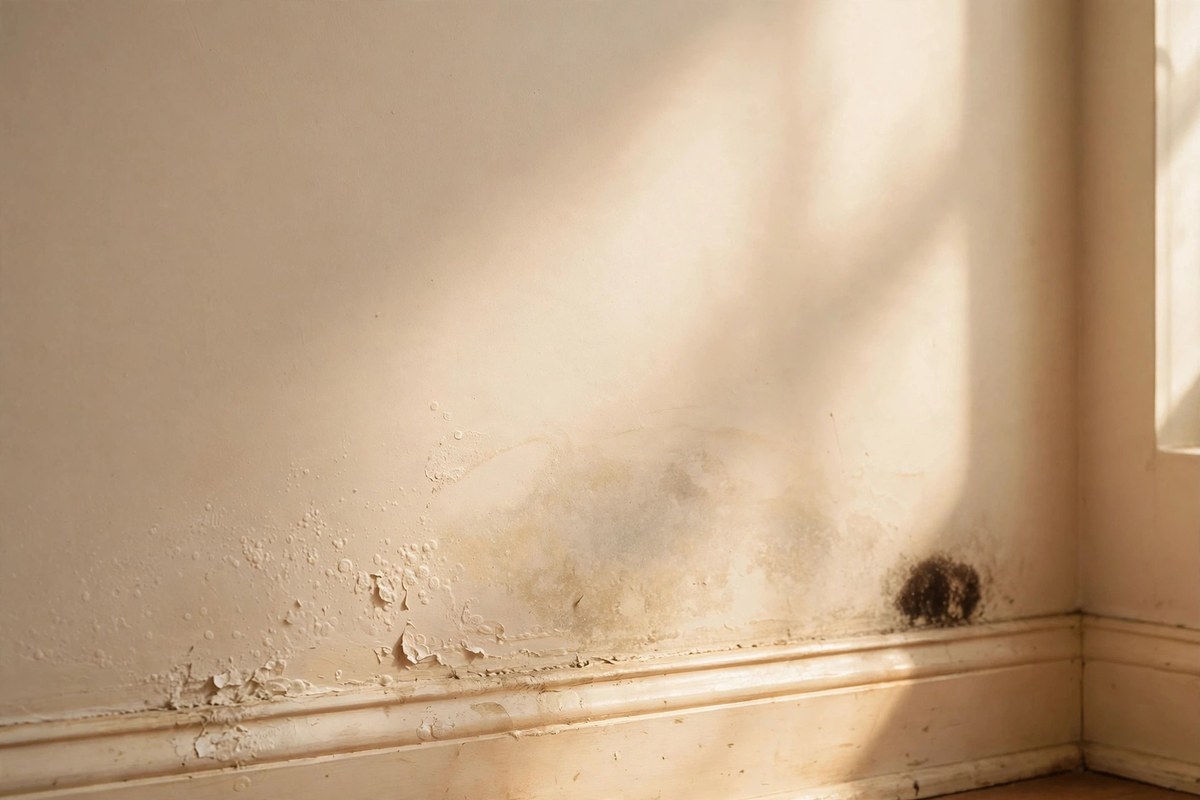
The house is quiet, every tap is off, and yet somewhere behind the plaster you can hear water moving. That sound is worth taking seriously — here is how to work out what it is.
Read the guide →
You barely notice it anymore — that faint refill sound every few minutes. But a toilet that never fully shuts off is one of the most common hidden leaks in a Keller home.
Read the guide →Fast response across Keller · Non-invasive equipment · Up-front explanation of your options
