A dropping waterline with no puddle in sight does not mean you are imagining it. Here is how to separate normal Texas evaporation from a real leak, and where hidden leaks actually hide.
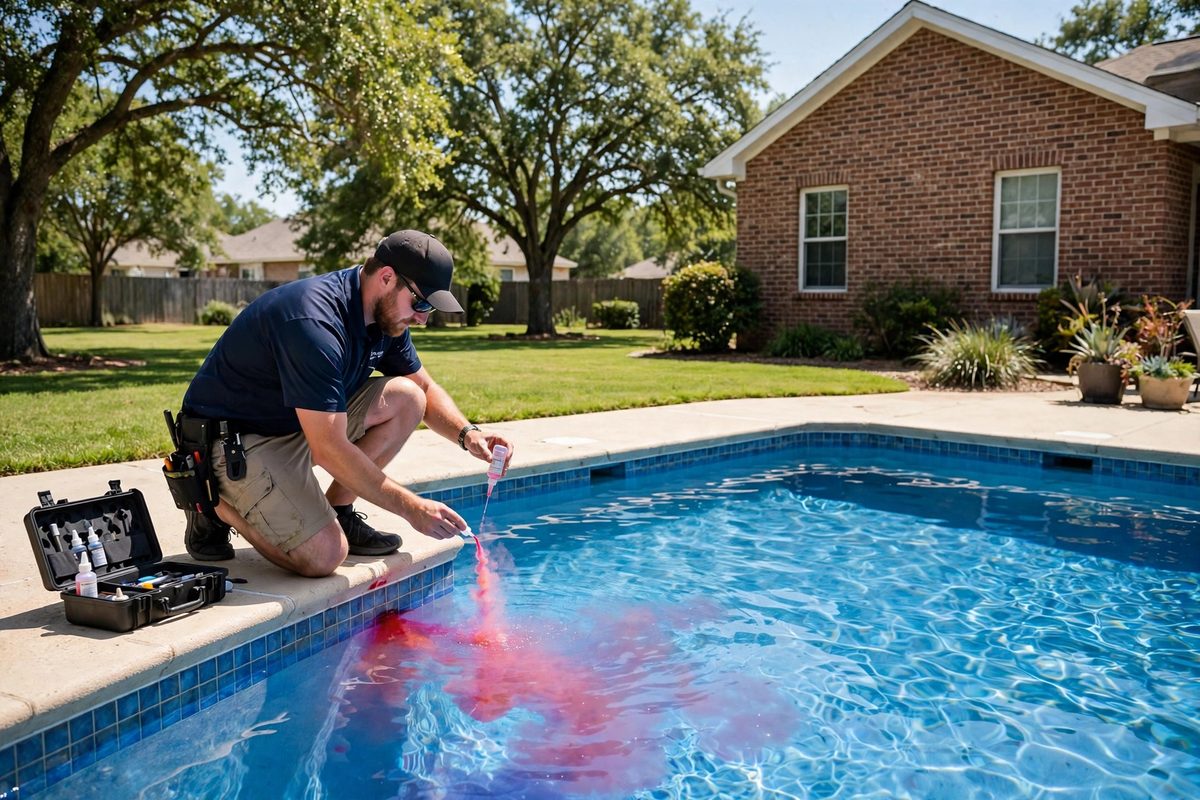
If your pool is losing water but no visible leak shows up anywhere around it, the first question is not where the leak is — it is whether you actually have one. Every outdoor pool in North Texas loses water to evaporation, and in a Keller summer that loss can be surprisingly large. A hot, windy week in July or August, with daytime highs over 100 degrees and low humidity, can take a quarter inch or more off the surface in a single day. That adds up to well over an inch in a week, which looks alarming on the tile line even when nothing is wrong.
The tricky part is that Keller pools do not all evaporate at the same rate. A pool in full sun off Rufe Snow Drive will lose more than a shaded pool tucked under live oaks in Hidden Lakes. Wind matters too: an exposed backyard on a ridge catches more breeze across the surface than a pool walled in by fences and a two-story house. Pool heaters, waterfalls, and spillover spas all add to the loss, because moving, heated water evaporates faster than still water. So before you start hunting for a leak, you need a baseline for your own pool, not a number from a national website.
That is where a simple observation routine helps. Mark the waterline with a piece of tape on the skimmer faceplate or a pencil mark on the tile, then check it at the same time each day for a few days when nobody is swimming and the pump schedule is unchanged. Splashing from kids, dogs, and cannonballs can easily look like a leak over a weekend, so a quiet weekday stretch gives you the cleanest reading. If the level drops steadily day after day, rain or no rain, you are probably looking at something more than evaporation — and the next step is narrowing down where it is going.
A pool losing water with no visible leak is frustrating precisely because the water has so many quiet ways out. The most common one is not a dramatic crack in the shell. It is a small failure somewhere in the system that moves water out of sight: down a drain line, into the ground under the deck, or back into the soil through a joint that only leaks when the pump is running. Because the water never reaches the surface of your yard, there is no puddle to point at.
Keller's ground makes this worse. The expansive clay soil across Tarrant County swells when it is wet and shrinks when it dries out, and that seasonal movement works on everything buried in it — pool plumbing included. A rigid PVC joint that was fine for ten years can develop a hairline separation after a few hard cycles of drought and heavy rain. The same movement can open a small gap around a skimmer throat or a return fitting, letting water seep into the soil behind the pool wall a little at a time. None of this shows up as a wet spot on the lawn, because the clay holds the moisture and the leak is slow.
Age plays a role as well. Many Keller pools were built during the big suburban build-outs of the 1990s and 2000s, and their original gaskets, seals, and fittings are now decades old. A skimmer gasket dries out and shrinks. A light niche seal hardens. An O-ring on a pump lid flattens. Each one can pass a small amount of water, and together they can account for a noticeable daily drop. The good news is that most of these are cheap to fix once found — the hard part, and the part worth doing properly, is finding the right one instead of guessing.
When a Keller pool is losing water and the deck is dry, the leak is usually in one of a handful of places, and checking them in order saves a lot of guesswork. Start at the skimmer, which is the single most common culprit. Look for a crack in the skimmer throat, a gap where the skimmer meets the pool wall, or a waterline that sits below the skimmer mouth and keeps falling past it. A skimmer leak often leaves a telltale sign: one corner of the deck that stays slightly damp, or soil that has settled a little near the skimmer box.
Next, check the fittings in the pool wall. Return jets, the main drain cover, the cleaner port, and especially the light niche are all sealed with gaskets that age out. A light niche leak is easy to miss because it only shows when the water level drops to the light itself and then stops — if your pool always seems to settle at the same level just below a light or a step jet, that fitting is the prime suspect. The same logic applies to tile-line cracks and to the joint where steps or a raised spa meet the main shell; water finds the lowest failed seal and stops falling once it gets below it.
The third hiding place is the plumbing itself: the underground lines between the pool and the equipment pad. These leaks are invisible by definition, but they leave clues. One is timing — a pool that loses water only while the pump runs is leaking on the pressure side, while a pool that loses water with the pump off is usually leaking on the suction side or through the shell. Another is the equipment pad: a pump, filter, or heater connection that drips only under pressure, or a backwash line that does not fully close, can send a steady trickle away where nobody notices. If your pool leak detection search has led you here, this pressure-versus-suction distinction is the first thing a technician will test, because it cuts the search area in half.
You do not need special equipment to narrow things down before calling anyone. Work through these checks on a calm stretch of weather, with the same pump schedule each day, and write down what you find. A short note each morning — level, pump on or off, weather — turns a vague worry into useful evidence.
One more check that costs nothing: the bucket test. Set a bucket of pool water on a step so the water inside sits at the same level as the pool, mark both levels, and compare them after a day. If the pool drops noticeably more than the bucket, evaporation is not your main problem. That simple comparison is worth doing in a Keller summer, when evaporation alone can fool even experienced pool owners. It will not tell you where the leak is, but it will tell you whether chasing one is worth your time — and that answer alone is worth a day of waiting.
If those checks point to a fitting or a skimmer problem you can see, a pool service company can often reseal it without draining the pool. If the level keeps falling with the pump off, or if it falls at the same rate no matter what you do, the leak is more likely underground or structural, and that is where professional equipment earns its keep rather than more guessing.
Underground pool leaks are the ones homeowners dread, and usually for the wrong reason. A leak in a buried line does not automatically mean tearing up the whole deck. Modern detection starts with pressure testing each line separately — skimmer, main drain, returns, cleaner line — to find which one will not hold pressure. Once the leaking line is identified, acoustic listening equipment can often pinpoint the break to within a few feet, because pressurized water escaping through a crack makes a sound that a trained ear and a sensitive microphone can follow through soil and concrete.
Structural leaks are a different story. A crack in a gunite shell, a failed expansion joint between the pool and the deck, or a separated bond beam can all let water into the ground behind the shell. In Keller, where clay soil movement is a fact of life, these cracks sometimes open slowly over several seasons rather than appearing all at once. Signs include a deck slab that has tilted or separated from the coping, a crack in the plaster that keeps reappearing after patching, or water loss that speeds up after heavy rain when the ground shifts. These are not do-it-yourself repairs, because patching the visible crack without addressing the movement behind it just buys a season.
There is also a case worth ruling out early: the autofill or water-leveler, if your pool has one. A leveler stuck open can mask a leak by constantly topping the pool up, which shows up as a mysteriously high water bill rather than a low waterline. Conversely, a leveler that has failed shut can make a normal pool look like it is leaking fast. Checking the leveler and the backwash valve takes five minutes and has saved more than one Keller homeowner from an unnecessary excavation. The same goes for the filter: a multiport valve that does not seat fully can send water to waste around the clock, quietly and invisibly, while the pool itself is perfectly sound.
If your own checks still leave you with a falling waterline and no answer, a detection visit usually follows a clear sequence, and knowing it helps you judge whether you are getting a thorough job. It starts with questions: when did the loss start, does it change with the pump on or off, and where does the level stop falling. Then comes a visual inspection of the shell, fittings, skimmer, and equipment pad, followed by a dye test — a small release of dye near a suspect fitting to see whether it gets pulled into a crack or gap.
From there, each plumbing line is isolated and pressure tested, and acoustic equipment is used on any line that fails. The goal is a specific diagnosis — which line, roughly where, and what kind of repair it needs — not a general verdict that the pool leaks somewhere. A good report will also distinguish a plumbing leak from a structural one, because the repair routes are completely different: a spot repair or a rerouted line versus shell or joint work. Ask for that distinction in writing before anyone starts cutting concrete.
For Keller homeowners, timing matters too. A slow leak found in late fall, when the pool sees less use, is easier and often cheaper to deal with than the same leak discovered in June, when every pool company in North Texas is booked solid and the pool is in daily use. If your waterline has been dropping all summer and you have been topping it up and hoping, the end of swim season is a sensible moment to get a firm answer. The same discipline applies inside the house: a hidden leak you can hear but cannot see is worth the same methodical approach, which is why our guide on the sound of running water in walls walks through a similar process for indoor plumbing. And if the problem turns out to be household plumbing rather than the pool at all — a slab line or a supply line feeding an outdoor spigot — a water leak detection check on the house side can rule that out before pool work begins.
A slow pool leak rarely stays a small problem just because it is slow. Water escaping under a deck washes fine soil out from beneath the concrete, and over time that erosion shows up as a hollow-sounding slab, a settled section of decking, or a coping stone that rocks underfoot. Water against a shell or a skimmer throat softens the surrounding soil and lets the structure move a little more with each wet-dry cycle. And water you keep replacing is water you keep paying for, along with the chemicals needed to balance it — a hidden cost that adds up across a Keller summer even when the leak itself looks minor.
That is the real reason to pin down a falling waterline instead of living with it. Most pool water loss in Keller turns out to be evaporation, a worn skimmer gasket, or a tired fitting seal — all manageable once identified. The cases that cost real money are the ones left to run for a season or two while the ground underneath quietly changes. A few days of careful observation, the checks above, and, when they point underground, a proper detection visit will usually give you a straight answer and a repair you can plan around.
If you are in Keller, Southlake, or anywhere across North Tarrant County and your pool keeps losing water with no visible leak to explain it, start with the bucket test and the pump on-versus-off comparison this week. Write down the numbers. Then, whether the answer is evaporation or a genuine leak, you will be deciding from evidence instead of worry — and if you need help from there, the team behind our pool leak detection service can take the search from your backyard observations to a pinpointed repair. For a broader look at how household leaks waste water, the U.S. Environmental Protection Agency's Fix a Leak Week guidance is a useful reminder that small, hidden leaks add up faster than most people expect.
In a hot, windy Keller summer, losing up to about a quarter inch a day to evaporation is not unusual, especially for a pool in full sun with a waterfall or spillover spa running. Shaded pools and calm weeks lose less. The number that matters is your own pool's pattern: a steady drop well beyond what a bucket test shows, or a drop that continues through cool, humid weather, points to a leak rather than evaporation. A single hot day is not evidence; a consistent week-long trend is.
Because the leak is at that level. Water stops draining once it falls below the failed seal, fitting, or crack, so a pool that always settles just below a light, a step jet, or the skimmer mouth is telling you exactly where to look. Check that fitting first — its gasket or seal is the most likely failure. If the level never stops falling, even to the bottom of the skimmer, the leak is more likely in the underground plumbing or the main drain line, which keeps draining regardless of the surface level.
Short term, yes — running a pump with the water below the skimmer can burn out the pump and let air into the system, which causes more damage than the leak itself. Keep the level at least halfway up the skimmer mouth. But do not treat topping up as a solution for the season: the water escaping underneath can erode soil beneath the deck, and the replacement water and chemicals add up. Use the bucket test and the pump on-versus-off comparison to get an answer within a week, then get the leak pinpointed before the ground under the deck changes any further.
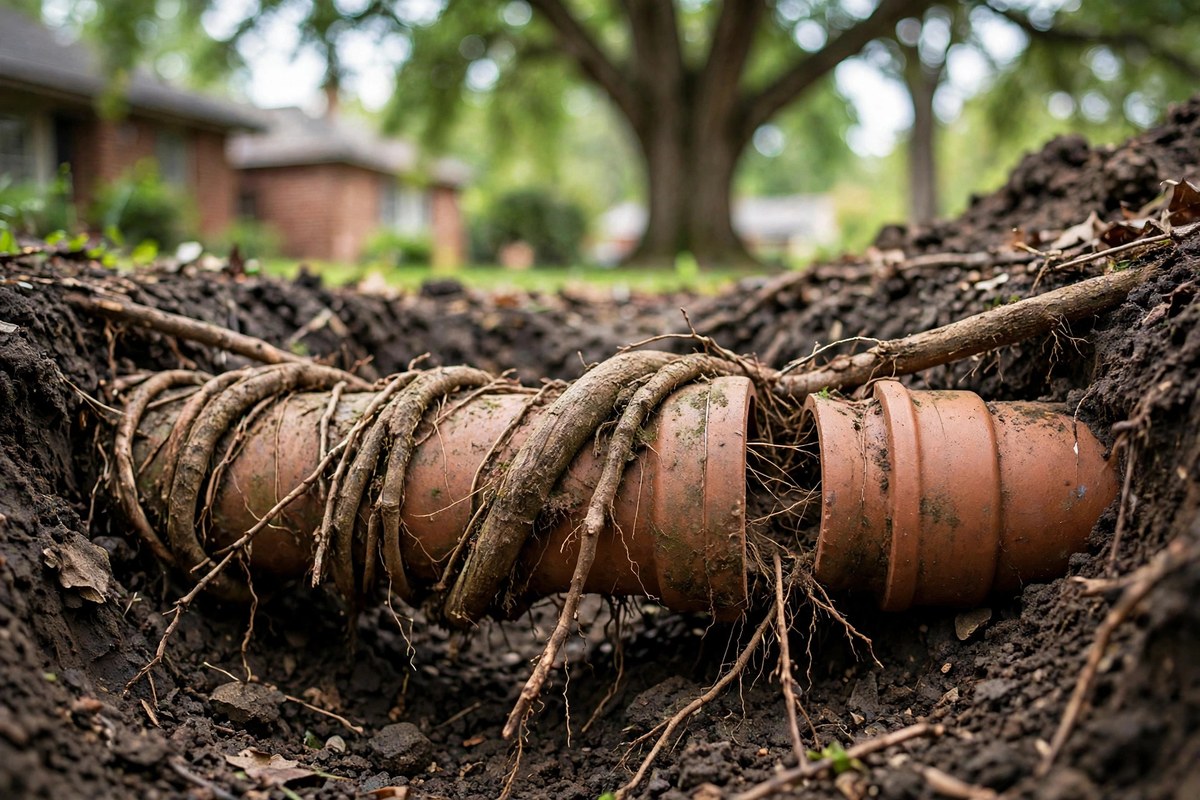
The tree in your front yard isn't trying to break your plumbing — it's just thirsty. But once its roots find a sewer line, the damage builds quietly until a drain backs up.
Read the guide →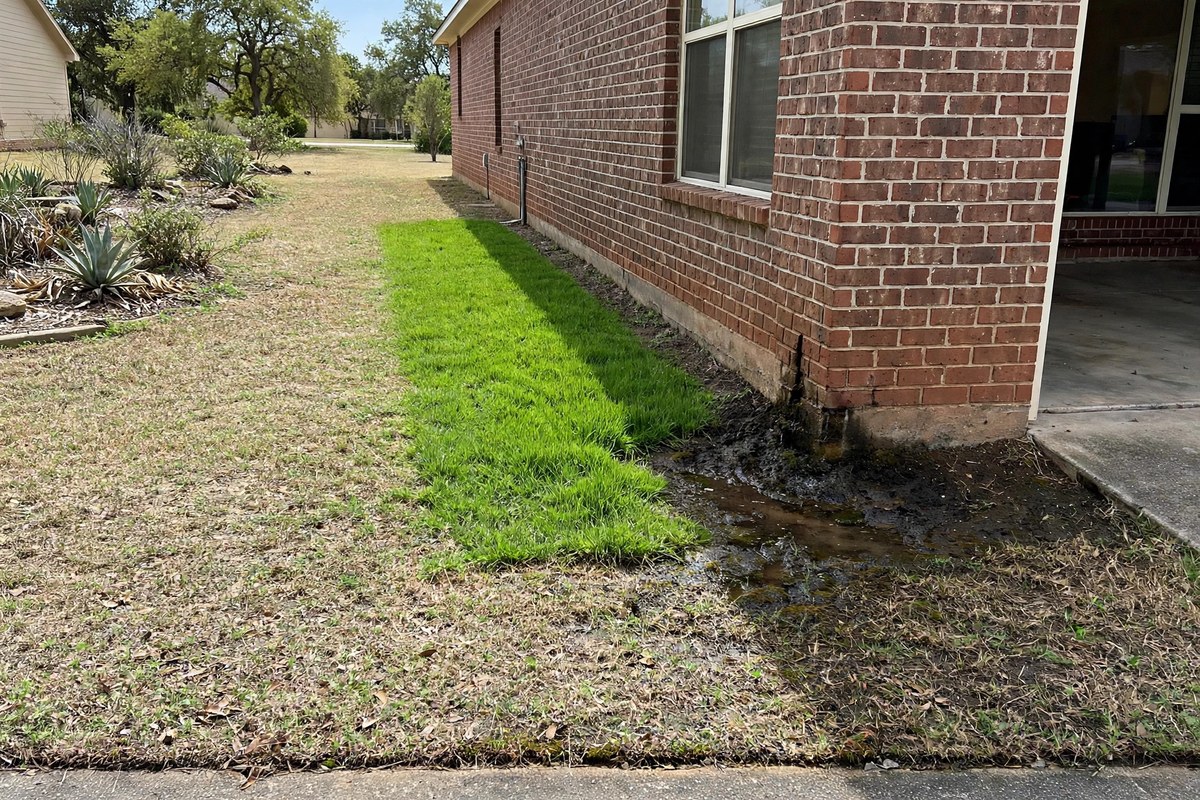
A sewer line does not usually fail all at once. It leaks, sags or cracks quietly underground — and the house tells you in small, easy-to-miss ways long before sewage ever backs up.
Read the guide →Fast response across Keller · Non-invasive equipment · Up-front explanation of your options
