The tree in your front yard isn't attacking your plumbing — it's just thirsty. But once roots find a sewer line, the damage builds quietly until a drain backs up.
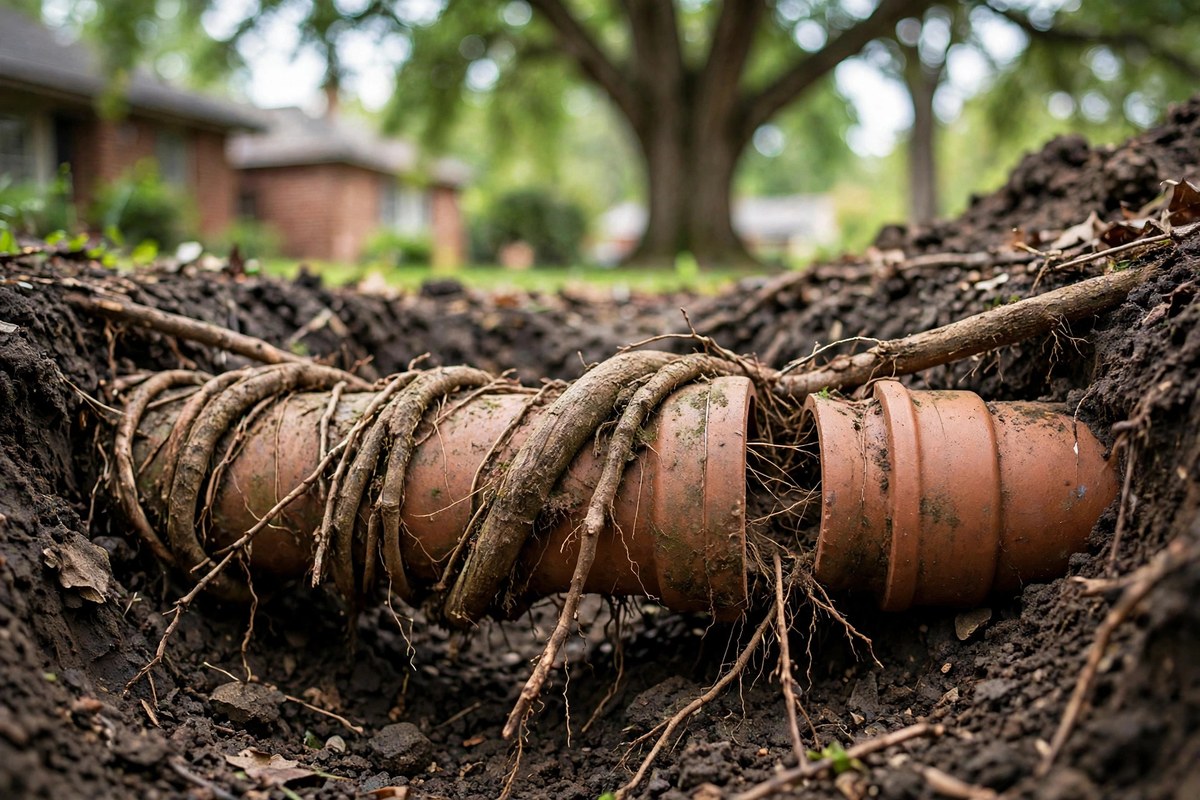
Tree roots in sewer lines are not there out of malice, and they are not hunting for your plumbing on purpose. They are following moisture, and a sewer line is the most reliable source of it in a North Texas yard. Even a healthy line releases a faint trace of water vapor through its joints, and a line with a hairline crack or a slightly separated joint releases more. In Keller's long, dry stretches — the weeks in late summer when the clay soil pulls away from foundations and lawns go crisp — that vapor is a signal a root system can follow for many feet.
This is why the problem shows up most often under the big, established trees Keller is known for: live oaks and pecans in older neighborhoods near Old Town Keller and along Rufe Snow Drive, where homes from the 1970s and 1980s still run on their original clay or cast-iron sewer lines. Those lines were built in sections, with a joint every few feet, and every joint is a potential doorway. Modern PVC lines have far fewer joints and solvent-welded connections, which is one reason newer subdivisions off North Tarrant Parkway see this less — but any line, of any age, can develop a crack where shifting soil stresses it, and Keller's expansive clay soil shifts a lot.
The entry is almost always smaller than people imagine. A root hair finer than a thread slips through a gap at a joint or into a hairline crack, drawn by the moisture inside. Once inside, it finds exactly what roots want — water and nutrients, year-round, regardless of drought — and it grows. The fine roots branch, thicken and mat together, and that mat starts catching everything flowing past: toilet paper, grease, soap residue and sediment. Flow slows, and the mat grows faster, because a slower flow leaves more behind.
Meanwhile the soil outside is doing its own work. Keller sits on expansive clay that swells when wet and shrinks when dry, and that seasonal movement tugs at buried lines. A joint that was snug in a wet spring can open a fraction of an inch after a dry August, and a line that settled unevenly can develop a low spot — a belly — where waste sits instead of flowing away. Roots do not cause the clay to move, but they exploit every opening the movement creates. By the time a homeowner notices anything, the intrusion is usually a season or more old, and the line may have a genuine structural problem underneath the root mass, not just a blockage. That distinction matters, because it decides whether the fix is clearing or repair, and it is exactly what a sewer leak detection inspection is meant to establish.
Tree roots in a sewer line rarely announce themselves with a dramatic backup on day one. They announce themselves in small, easy-to-dismiss ways, usually in the bathroom or fixture closest to the street — the one whose drain run passes under the front yard trees. Watch for a pattern, not a single event: one slow drain is a local clog, but several fixtures slowing together, or the same drain slowing again weeks after it was cleared, points to the main line.
Any one of these on its own has innocent explanations — a dry trap, a vent problem, a sprinkler head. Two or more together, especially with a large tree between the house and the street, is the classic picture of roots in the line, and it is worth investigating before it becomes a backup. The earlier guide to the signs of a broken sewer line covers the wider set of symptoms; roots are one of the most common causes behind them in Keller's older neighborhoods.
Guessing is the expensive way to handle a suspected root intrusion, because the treatment for a root mat and the treatment for a collapsed section are completely different jobs. A sewer camera inspection removes the guesswork: a small camera travels the line from a cleanout — usually a capped pipe stub near the house or in the yard — and shows the inside of the pipe on a screen, foot by foot. The technician can see where roots enter, how thick the mat is, whether the pipe is cracked, offset at a joint or bellied, and how far from the house each problem sits.
That footage also tells you what you are not dealing with. A line full of roots but structurally sound is a different conversation from a line where a root mass has split a clay section or pushed a joint apart, and both are different from a line whose real problem is grease buildup or a foreign object. If you are weighing repair options, ask that the inspection be recorded and the problem spots marked by distance from the cleanout — it makes every later conversation clearer, including any discussion with an insurer, and it gives a baseline to compare against if the line is checked again later. The EPA's septic and sewer system guidance makes the same general point for homeowners: know where your wastewater goes and what condition it is in before a failure forces the issue.
The honest answer is that there is no single fix, and anyone offering one without a camera inspection is guessing. Cutting — running a mechanical root cutter or a high-pressure jet through the line — clears the mat and restores flow, and it is often the right first step, because it confirms the diagnosis and buys time. But cutting leaves the entry point open, so roots grow back, typically within a year or two and sometimes faster. For a line that is otherwise sound, scheduled cutting can be a reasonable holding pattern, but it is maintenance, not repair.
Where the camera shows a cracked or offset section, the lasting options address the pipe itself. Trenchless lining installs a resin sleeve inside the existing line, sealing joints and cracks along a damaged stretch without digging up the yard — a good fit when the line's overall alignment is still sound. A spot repair excavates just the damaged section and replaces it, which suits a single bad joint or a short collapsed run. Full replacement is the answer when the line has failed in several places, lost its grade, or is simply at the end of its service life. Each option suits a different diagnosis, and the camera footage is what picks between them — which is why a rushed quote for the biggest job, or the cheapest one, should both be treated with caution.
One caution about do-it-yourself chemical fixes: root-killing products poured down a drain can damage the line further, harm the tree, and — in a home on a septic system — disrupt the biological treatment the system depends on. Products applied professionally through the line, after inspection, are a different matter from a bottle tipped down a toilet on a guess. If a backup is already happening, or sewage is coming up through a floor drain, stop using water and treat it as an emergency leak: the priority is stopping the flow and getting the line assessed, not experimenting with chemicals while waste water rises.
Keller homeowners do not have to choose between shade and plumbing, but they do have to respect the distance between the two. When planting anything new, find out where the sewer line runs first — the cleanout location and a line locate before digging are the starting point, and calling 811 before any excavation is both free and required before you dig in Texas. As a rule of thumb, keep large shade trees well away from the line's path, and plant smaller ornamental trees, like a crape myrtle, where a mature live oak would eventually reach it. Willow, poplar and silver maple are famously thirsty and aggressive-rooted; they are the worst choices near any buried line.
For trees already in place, the useful habits are unglamorous: do not ignore a drain that keeps slowing, do not let a small recurring clog become a twice-a-year ritual, and have the line camera-checked if the home is older and the symptoms fit — once, to establish a baseline, rather than repeatedly paying for clearings that never address the opening. Keep grease out of drains, since grease helps a root mat catch debris and harden into a blockage, and the EPA's WaterSense resources are a solid reference for the household habits that keep any wastewater line healthier. And if your home also shows damp spots, foundation cracks or unexplained water use, check the water side too — our water leak detection guide covers the meter test that separates a supply leak from a sewer problem, because the two can look surprisingly alike from inside the house.
Both, in stages. Fine roots slip through a joint or hairline crack and form a mat that catches paper and grease, which blocks flow first. As those roots thicken over seasons, they can widen the opening, shift a joint out of line and, in an older clay or cast-iron line, snap a weakened section. That is why a line that only drained slowly last year can back up this year — the root mass and the damage both grew in the meantime.
Cutting restores flow, but it does not close the opening the roots came through, so regrowth is normal — often within a year or two, faster for a thirsty tree in a dry summer. Think of cutting as buying time and confirming the diagnosis, not as a repair. A lasting fix has to deal with the pipe itself: sealing or lining the damaged section, replacing it, or both, depending on what the camera shows.
Usually not. Removing a mature live oak or pecan over one root intrusion is rarely the first answer, and it does nothing for the cracked joint the roots entered through — the next tree, or the same stump's regrowth, can find it again. The practical order is camera inspection first, repair or line the damaged section, then manage the tree with proper pruning and planting distance for anything new. If the tree is already failing or planted almost on top of the line, that conversation is different, but it follows the inspection, not the other way around.
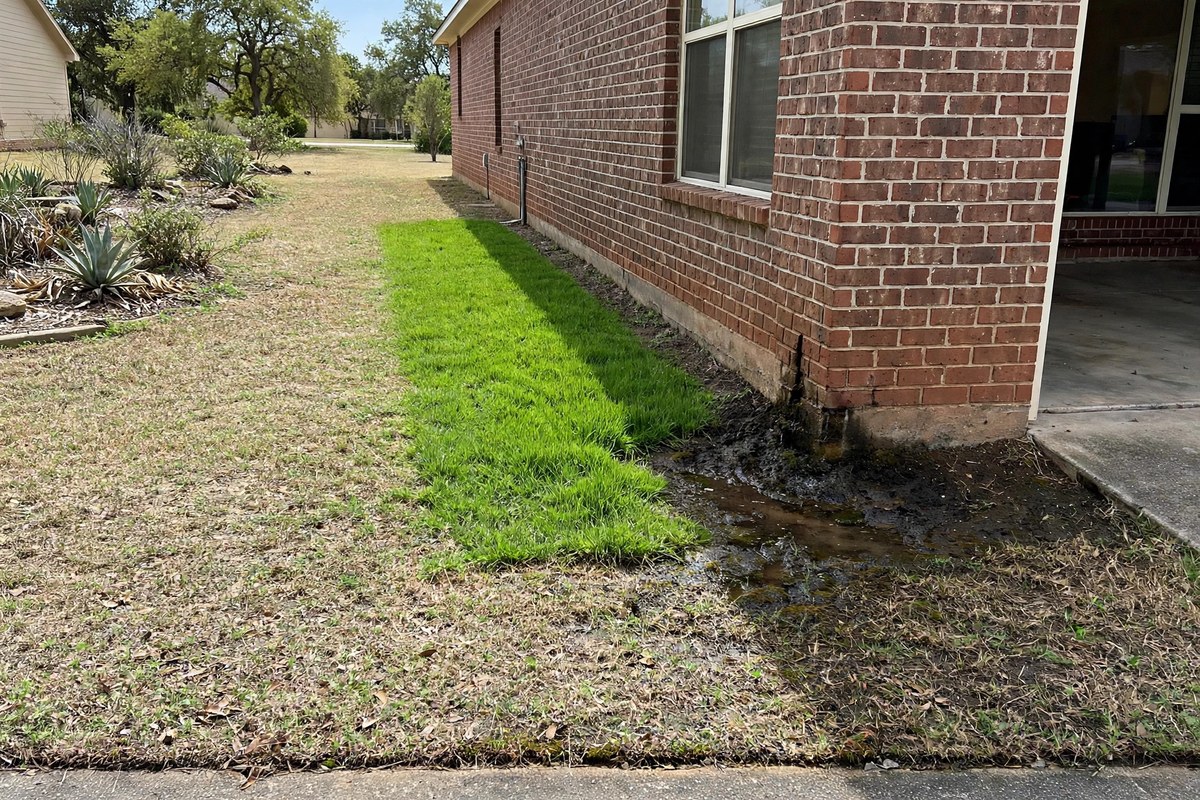
A sewer line does not usually fail all at once. It leaks, sags or cracks quietly underground — and the house tells you in small, easy-to-miss ways long before sewage ever backs up.
Read the guide →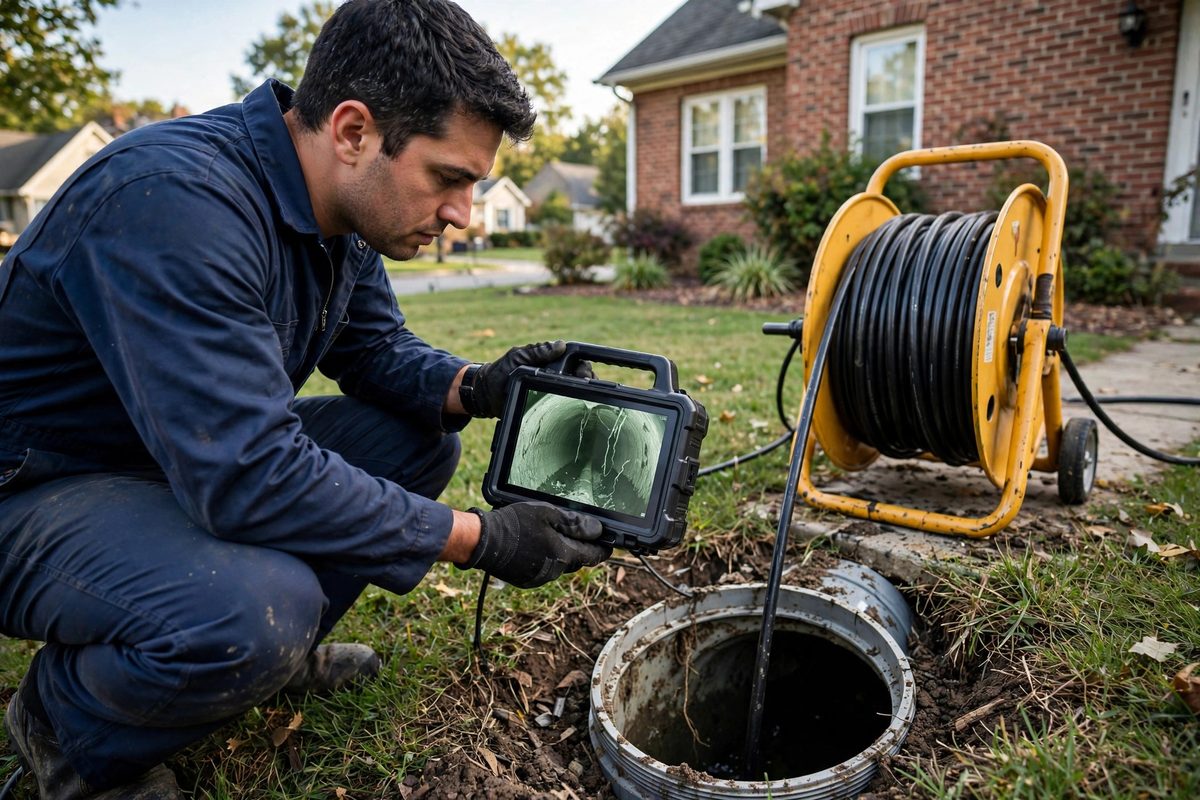
A sewer smell that comes and goes is rarely just a dirty drain. Work through the usual causes in order — dry traps first, then vents, wax rings and the sewer line itself — before it becomes a bigger problem.
Read the guide →Fast response across Keller · Non-invasive equipment · Up-front explanation of your options
